






Learn if a fat tire e-bike for beach sand is a good choice, with tips on traction, tire pressure, braking, battery range, and summer riding.
Start With the Honest Answer
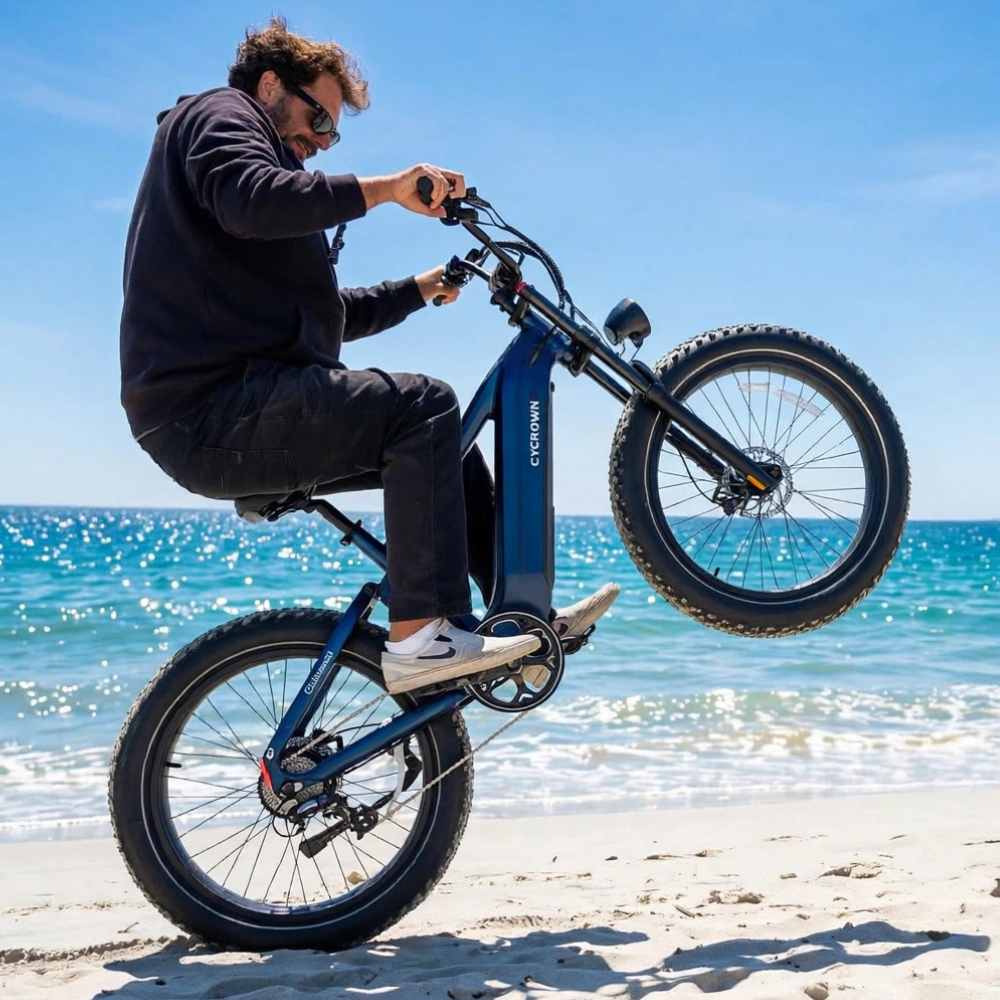
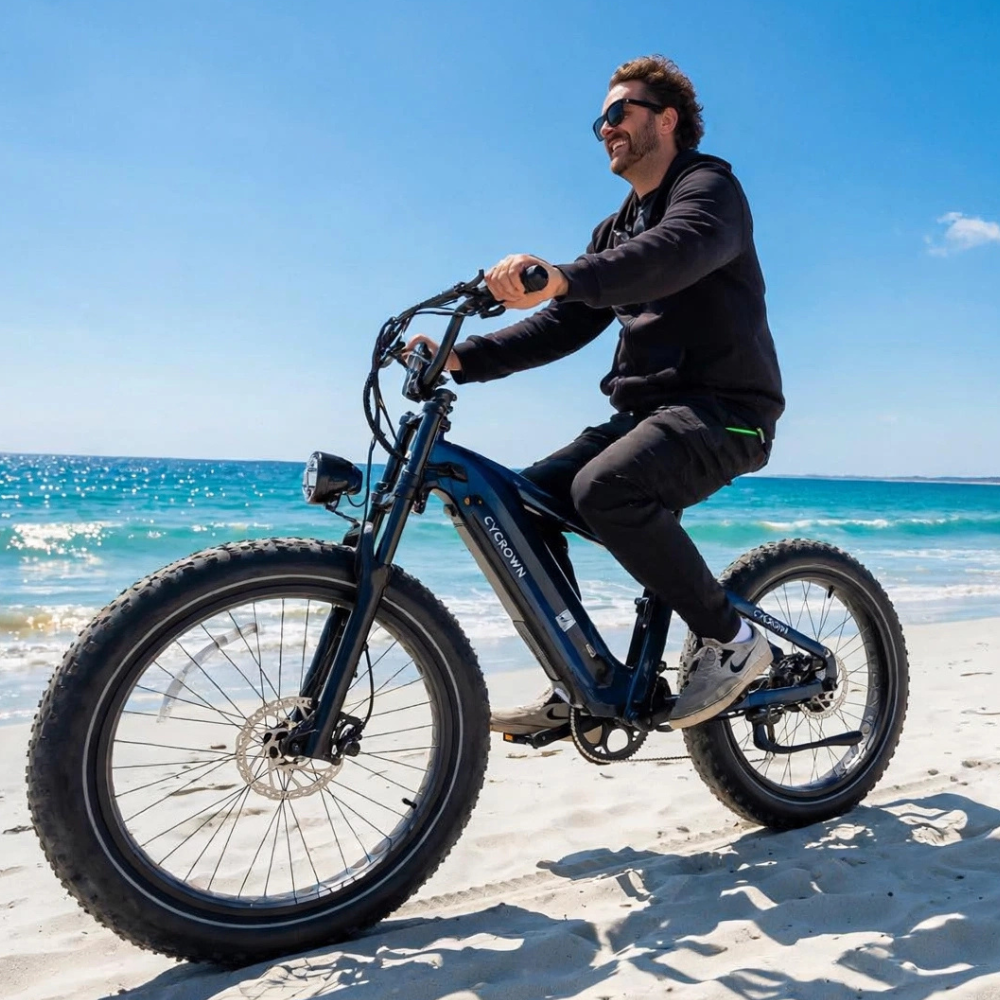
A fat tire e-bike for beach sand can be a good choice for firm sand, packed beach paths, sandy trails, and coastal riding, but it is not built to float through every soft dune or deep dry beach section. Fat tires can improve stability compared with narrow tires because they spread the rider’s weight over a wider contact patch, but riders still need to avoid deep loose sand, steep dune areas, soft shoulders, and places where e-bikes are not allowed.
That distinction matters. A fat tire e-bike can feel more planted on hard-packed beach sand, gravel paths near the coast, and sandy campground roads. It will not magically make deep powdery sand easy. The bike helps, but route choice and riding technique still decide how smooth the ride feels.
CYCROWN’s e-bike collection is built for riders who want more traction and comfort on mixed surfaces. For beach riding, the big question is not just “Can it ride on sand?” but “What kind of sand, what route, and how prepared is the rider?”
Why Fat Tires Help on Sand
Fat tires are wider than standard bike tires. That wider footprint can help the bike stay more stable on soft or uneven ground. On firm sand, packed beach access paths, sandy trails, gravel, and rough pavement, fat tires can feel more forgiving.
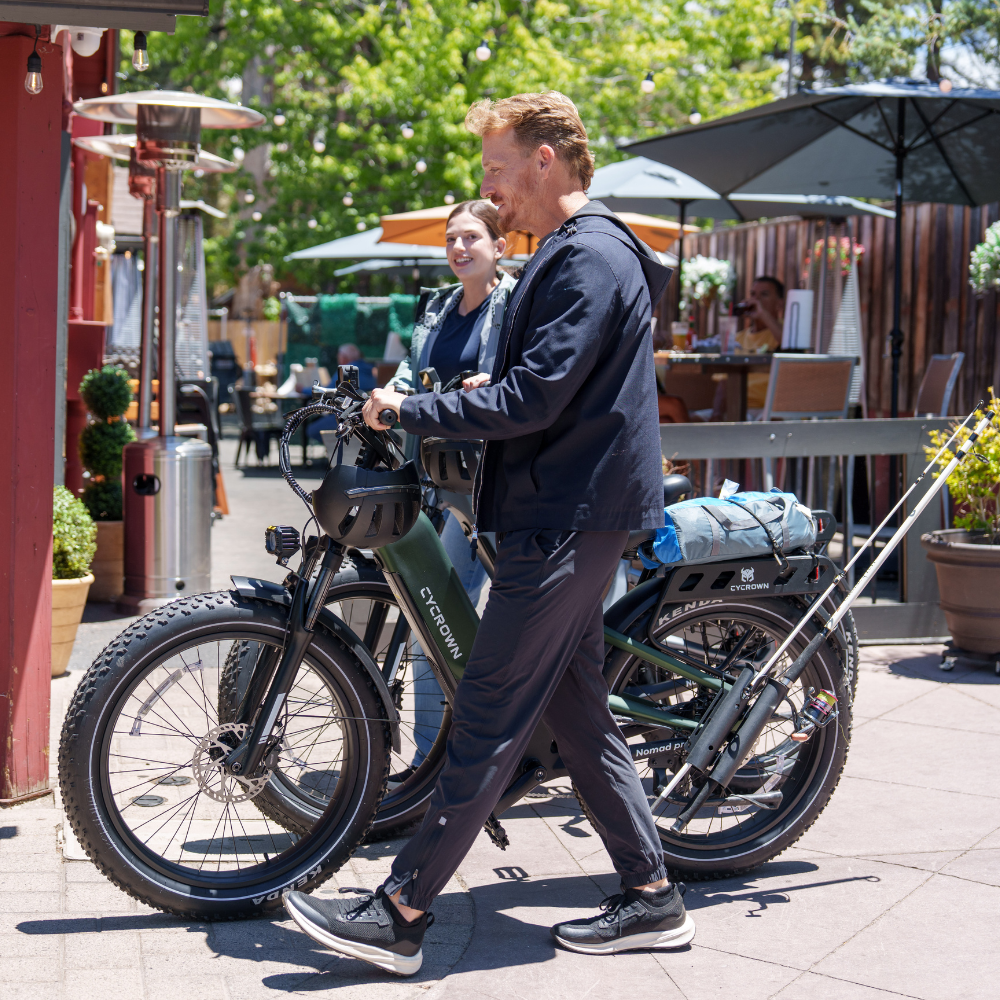
The CYCROWN Nomad Pro Fat Tire Ebike is a strong example from the US lineup. It lists 1000W peak power, a 960Wh battery, 90 miles of range, and a 28 mph top speed. That kind of range and tire setup can be useful for riders who want a more stable ride across changing summer surfaces.
Fat tires also help with comfort. Coastal routes often include cracked pavement, sandy shoulders, boardwalk connectors, campground roads, and uneven paths. Wider tires can soften some of that roughness, which makes the ride feel less twitchy.
What Fat Tires Cannot Fix
A fat tire e-bike is not the right tool for every sandy surface. Deep dry sand can stop the bike quickly. Loose beach sand can make steering heavy. Hidden holes, shells, rocks, and driftwood can create sudden hazards. Saltwater can also be rough on the chain, brakes, frame, and electrical parts.
If the sand is too soft or the bike starts digging in, step off and walk that section. It is better to lose a minute than fight the bike until the motor, tires, and your patience all file complaints.
Before riding near beaches, check local rules. Some beaches allow bikes only in certain areas, while others restrict e-bikes entirely. Places like Outer Banks routes in North Carolina, beach paths in Southern California, Cape Cod access roads, and coastal parks in Florida may have different rules depending on the path, season, and land manager.
Best Conditions for Fat Tire Beach Riding

Fat tire e-bikes work best on firm, packed sand and maintained sandy paths. Low-tide hardpack may be easier to ride than deep dry sand, but riders should stay far from saltwater and follow local access rules.
Good beach-riding conditions may include:
-
Firm beach sand away from waves
-
Packed access roads
-
Sandy campground roads
-
Coastal bike paths
-
Gravel and sand mixed trails
-
Boardwalk connector routes where bikes are allowed
Avoid steep dunes, soft dry sand, protected habitat areas, crowded beach zones, and wet saltwater edges. If the surface changes quickly, slow down and choose the firmest line.
Tire Pressure Matters on Sand
Tire pressure affects grip, comfort, and control. Some riders lower tire pressure slightly within the recommended range for better traction on soft surfaces. This can help the tire conform to sand and rough ground, but going too low can cause poor handling, rim damage, or extra battery drain.
Always stay within the tire and bike manufacturer’s guidance. Before beach rides, check tire condition, tread, sidewalls, and pressure. Sand can hide sharp shells, thorns, glass, or small debris, so inspect tires before and after the ride.
CYCROWN’s accessories and replacement parts collection is helpful for riders who want to maintain tires, brakes, lights, fenders, locks, and other summer riding essentials.
Ride Slower Than You Normally Would

Speed is one of the biggest mistakes on sand. A fat tire e-bike may feel stable, but soft ground can change quickly. If the front tire digs in or the rear wheel loses grip, fast reactions become harder.
Use lower pedal assist levels at first. Start gently. Keep your steering smooth. Brake early. Take wider turns. Avoid sudden throttle, sharp steering, or hard braking. If the bike begins to wander, stay calm and reduce inputs rather than overcorrecting.
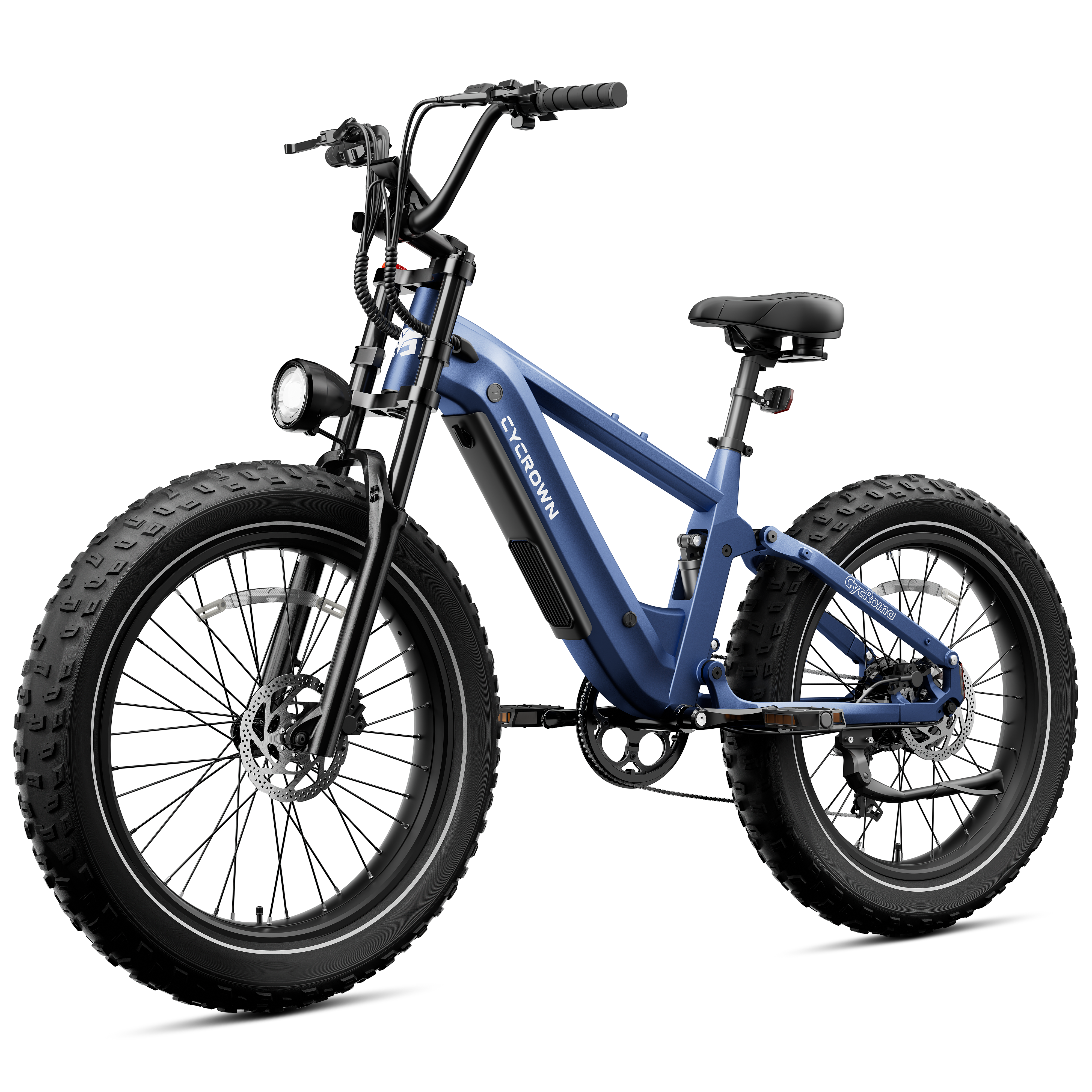
For all-terrain riders, the CYCROWN Roma All-Terrain Ebike is another mixed-surface option, listing 1500W peak power, a 960Wh Samsung battery, 90 miles of range, and a 28 mph top speed. It is not a dedicated beach bike, but it shows how all-terrain features can support rough-road and path riding when conditions are reasonable.
Braking on Sand Takes Patience
Braking on sand requires more distance and smoother pressure. Avoid grabbing the brakes suddenly. Use both brakes gently and slow before turns, not during them.
On sandy surfaces, hard braking can make the tires skid or dig in. If you are riding downhill on a sandy access road, control speed early. Do not let the bike build speed and then try to stop all at once.
Practice in a safe open area before riding near other people. Learning how the bike stops on packed sand is much better than discovering it near a crowded beach path.
Battery Range Can Drop on Soft Surfaces
Sand can reduce range because the motor has to work harder. Soft surfaces, lower tire pressure, higher assist levels, wind, heat, rider weight, and cargo can all increase battery use.
Plan shorter rides on sand and keep a larger battery buffer than you would on pavement. Coastal headwinds can also drain energy faster than expected.
Beach riders should pay extra attention to assist level because higher assist uses more power on soft ground.
Dress and Equip for Summer Visibility
Beach riding often means bright sun, glare, wind, and crowded shared spaces. Wear a helmet, sunglasses or eye protection, and visible clothing. Use front and rear lights if you ride early, late, or through shaded coastal paths.
A strong lock, water-resistant bag, phone mount, and basic repair kit can also make summer rides easier. Bring water, especially if you are riding in hot weather. That sounds obvious, but sun plus sand has a sneaky way of turning a short ride into a thirst-based character test.
Clean the Bike After Sandy Rides
Sand and salt can affect the chain, brakes, frame, and moving parts. After beach rides, wipe the bike down, brush sand away from the drivetrain, and dry any damp areas.
Avoid spraying water directly into the motor, battery, display, or charging port. If the bike was exposed to salty air or road spray, clean it gently and store it somewhere dry. Inspect brakes, tires, chain, and bolts more often if beach riding becomes part of your routine.
CYCROWN’s article on the Best All-Terrain eBikes of 2026 can help riders compare rugged setups, but maintenance is still what keeps summer riding reliable.
Ride Beach Sand With Respect
Fat tire e-bikes can be good for beach sand when the sand is firm, packed, and legal to ride on. They can add stability and comfort, but they do not remove the risks of deep sand, saltwater, hidden debris, crowded paths, or battery drain.
A good beach ride starts with the right route, slower speed, smooth braking, proper tire pressure, visible gear, and a clean bike afterward. If the sand looks too soft, walk the bike. The best beach riders are not the ones who force every section. They are the ones who know when to float through and when to step off.
What Beach E-Bike Riders Usually Ask
Is a fat tire e-bike good for beach sand?
Yes, a fat tire e-bike can work well on firm or packed beach sand, but it should not be treated as ideal for deep, dry, loose sand.
Are fat tires better than regular tires on sand?
Fat tires can feel more stable on soft surfaces because they create a wider contact patch. Riders still need smooth steering and careful braking.
Does riding on sand reduce e-bike range?
Yes. Sand creates more rolling resistance, so the motor works harder and battery range can drop faster than on pavement.
Should I lower tire pressure for beach sand?
Some riders lower pressure slightly within the recommended range for traction, but going too low can hurt handling or damage the tire.
Can I ride a fat tire e-bike near saltwater?
Avoid riding through saltwater. Salt can damage metal parts, brakes, drivetrain components, and electrical areas if not cleaned properly.


