










Most Motor Sounds Are Fine, But Not All of Them
The honest answer about e-bike motor noise: some of it is completely normal and nothing to worry about, while other sounds are genuine warning signals worth addressing quickly. Hub motors and mid-drive motors both produce consistent operational sounds during normal use, such as a low hum, pitch changes under load, and subtle mechanical feedback through the frame. What isn't normal is grinding, clicking at regular intervals, sudden changes in sound, or noises that progressively get louder. Knowing how to tell the difference is what keeps small issues from becoming costly ones.
Normal E-Bike Motor Sounds
Understanding what healthy motor noise sounds like is the foundation for recognizing when something changes.
Hub motor hum.
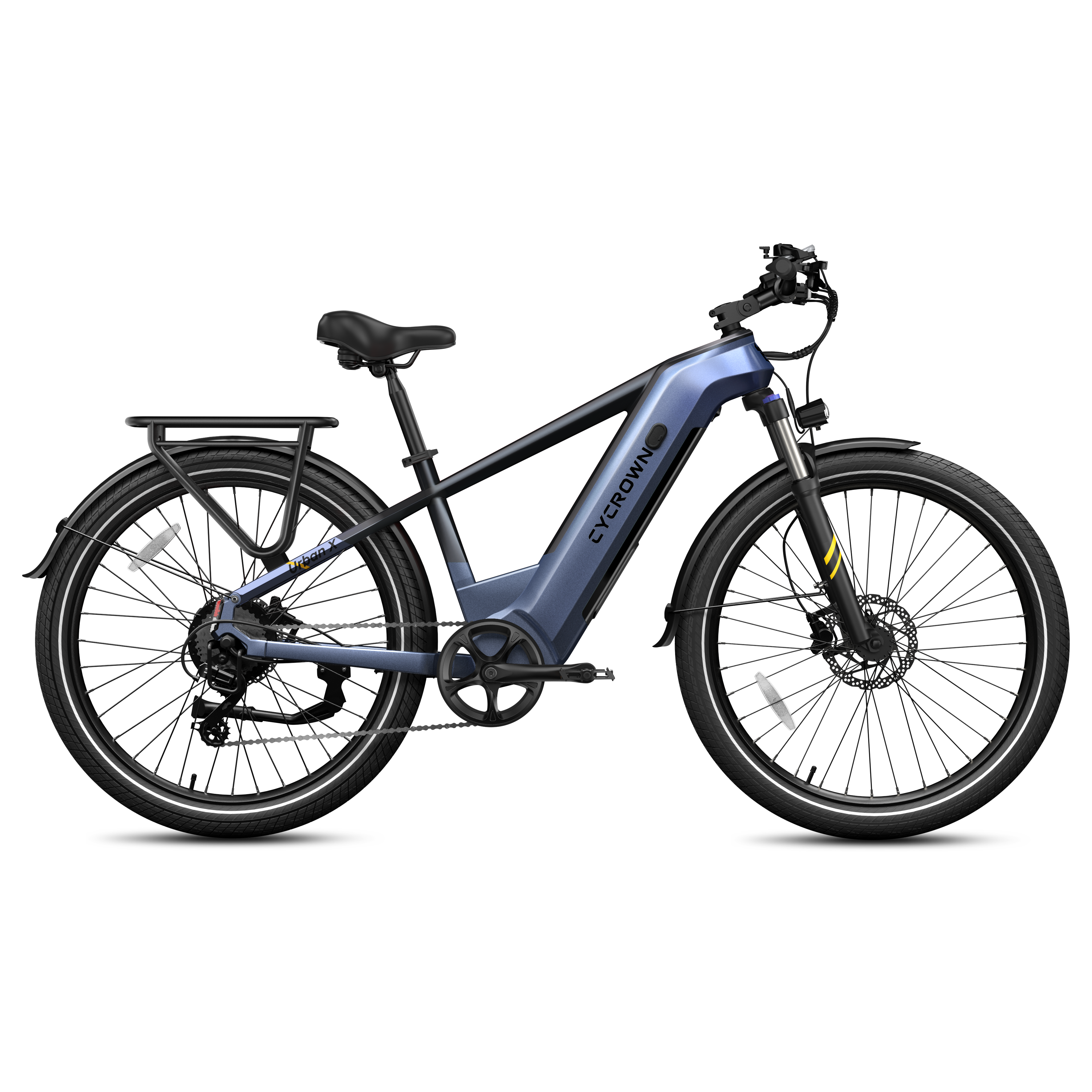
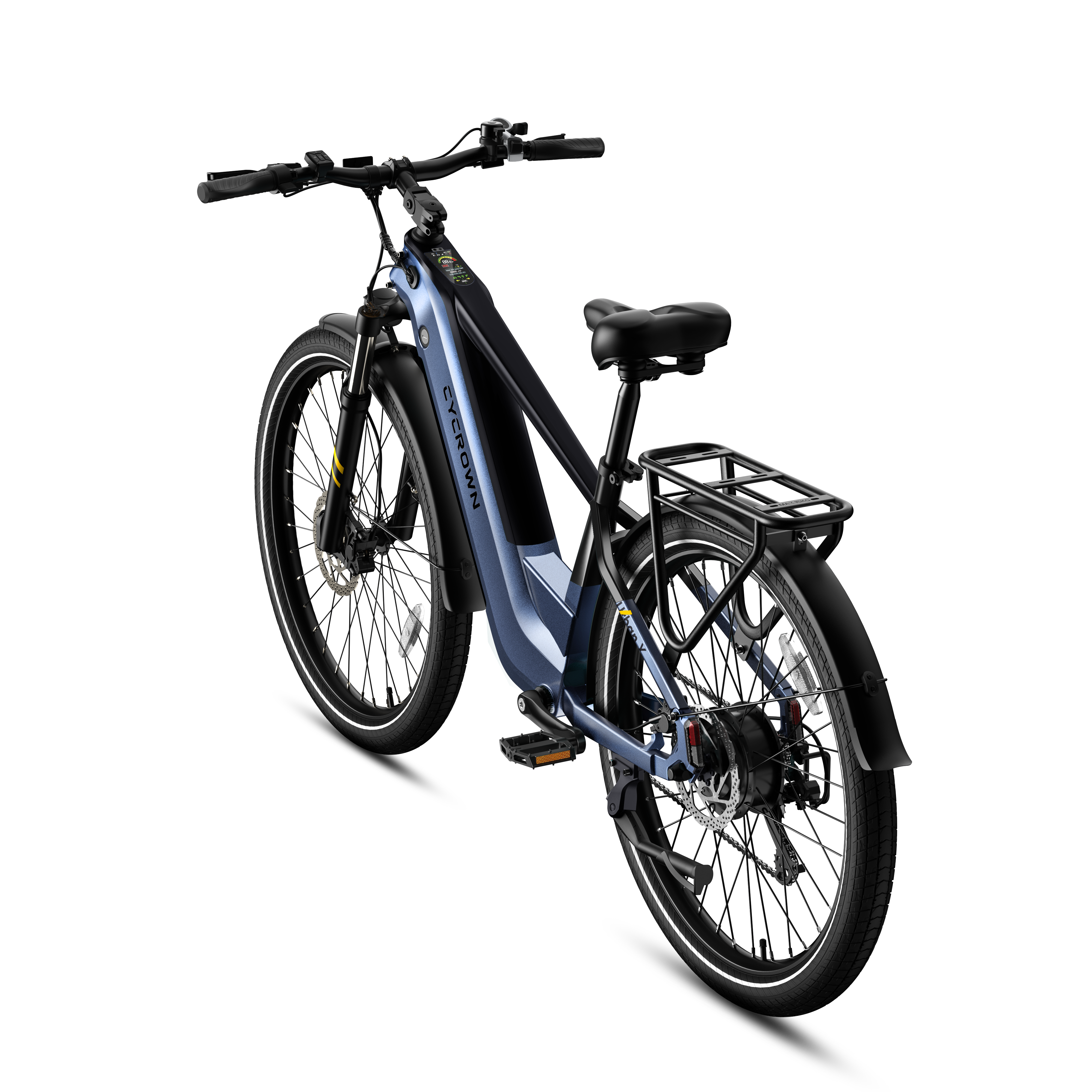
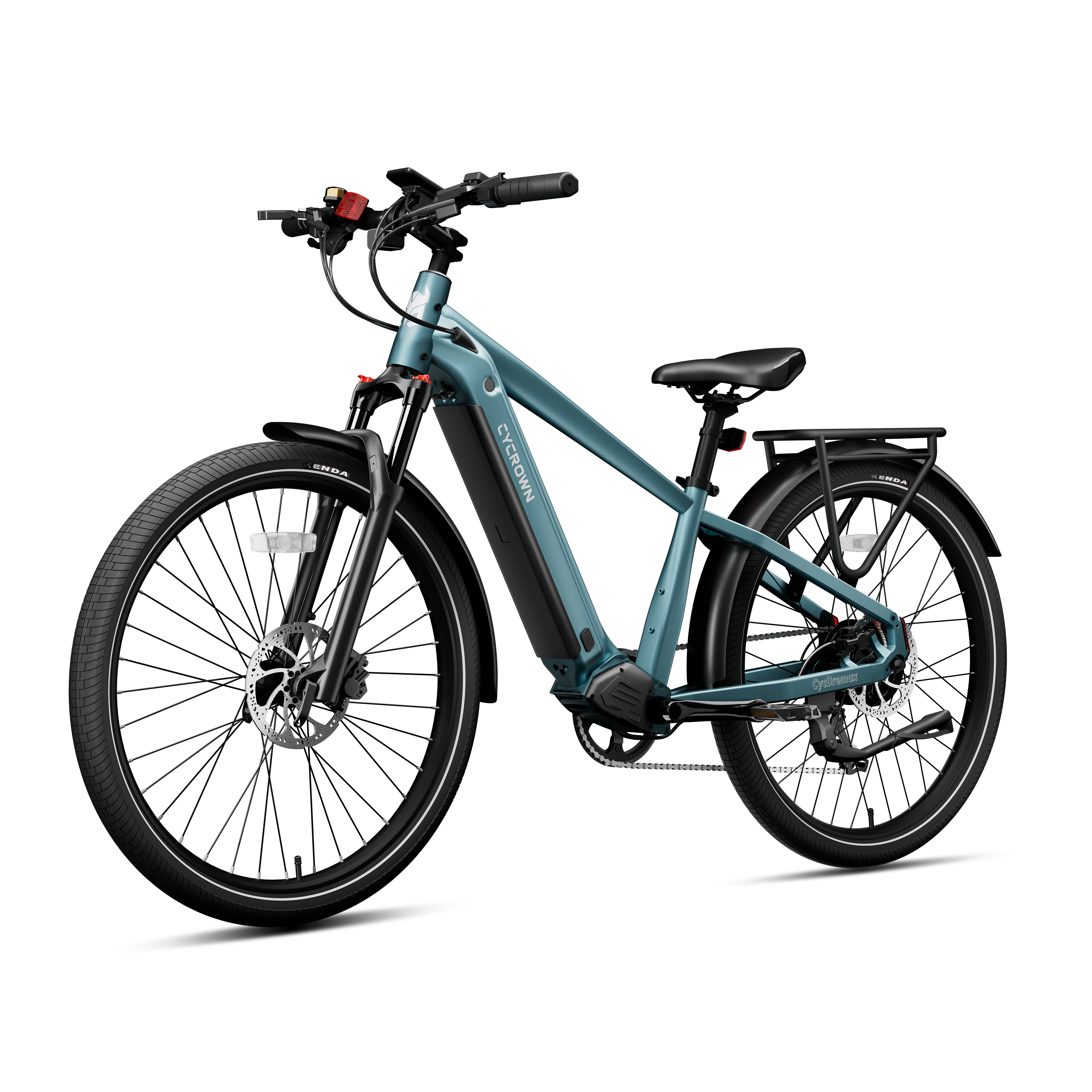
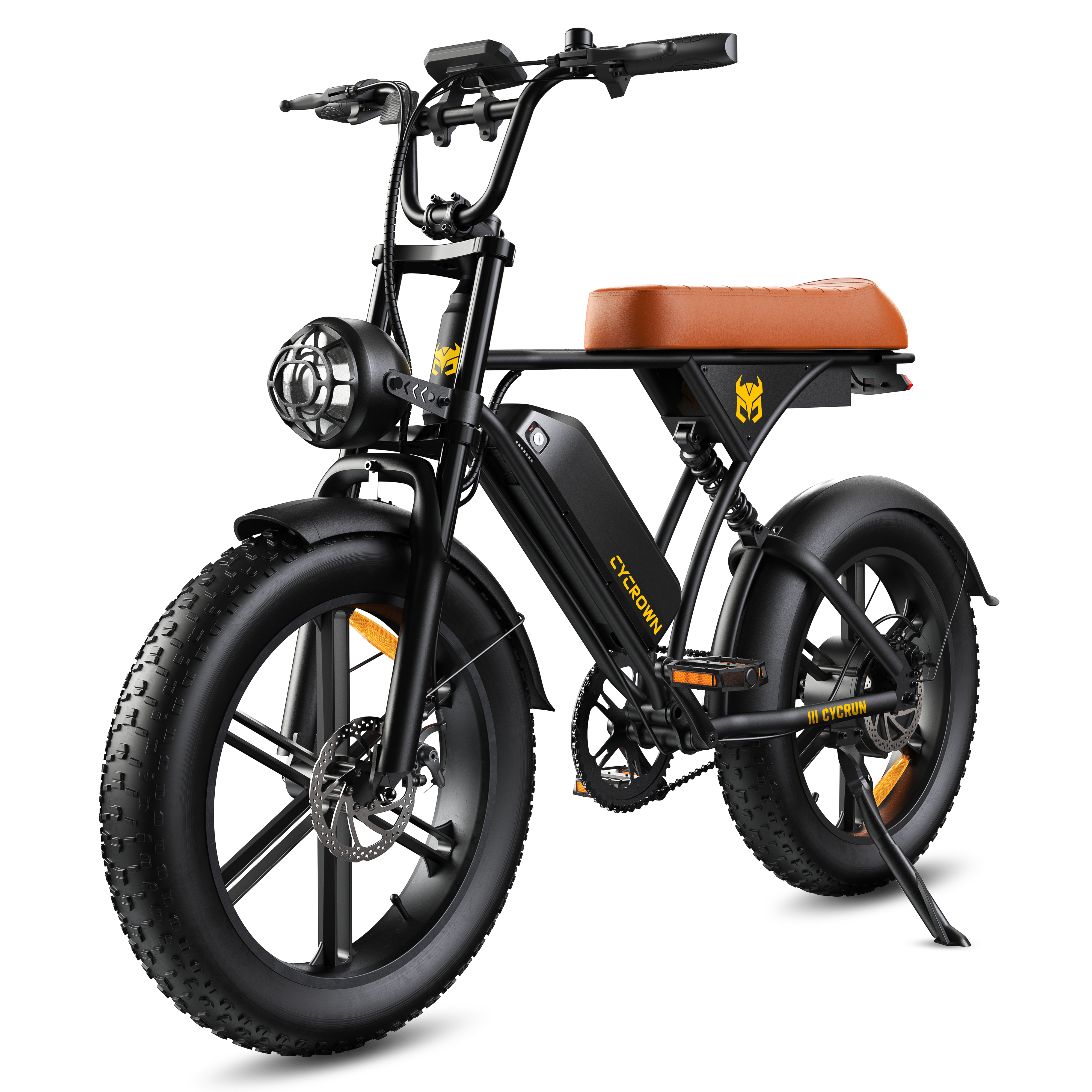
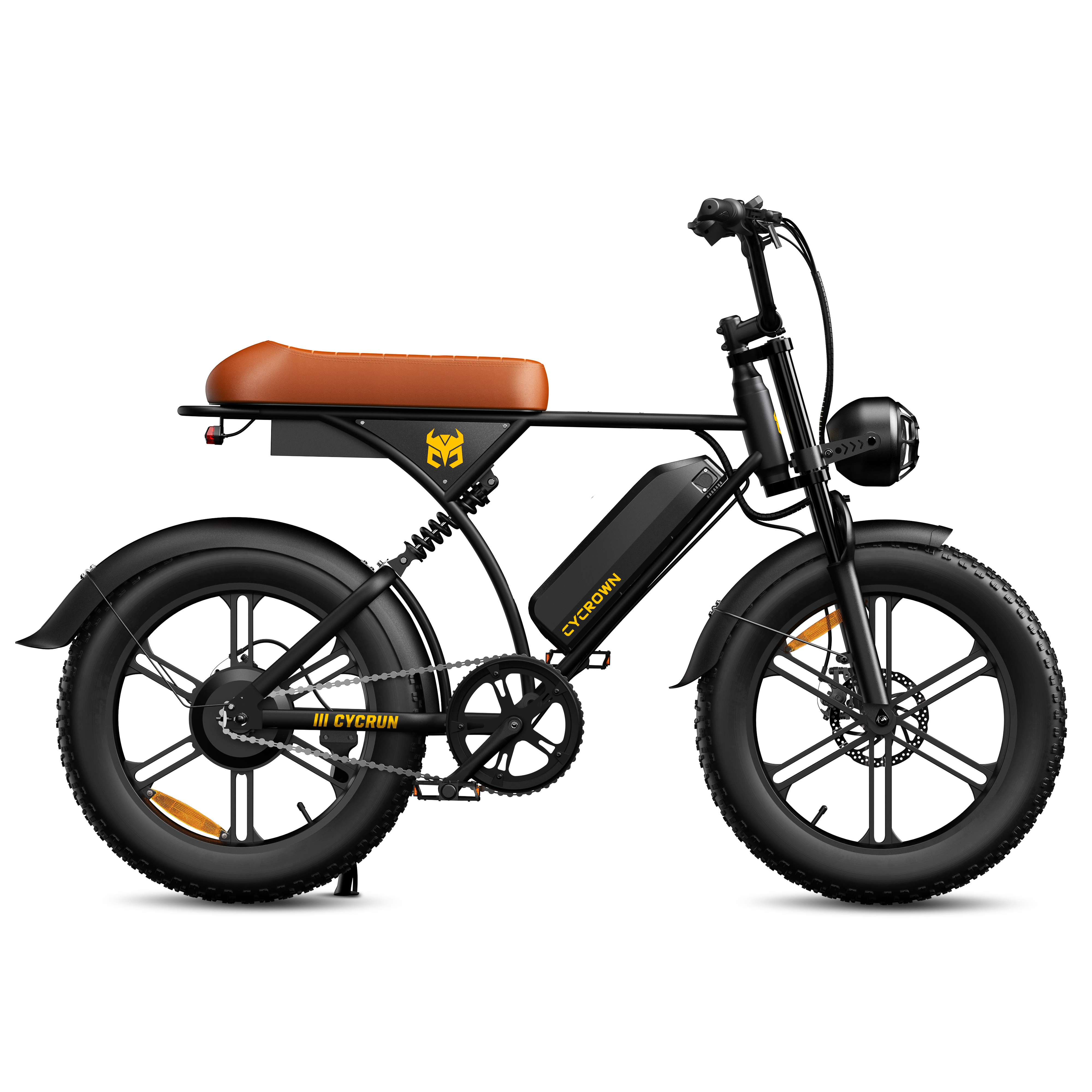
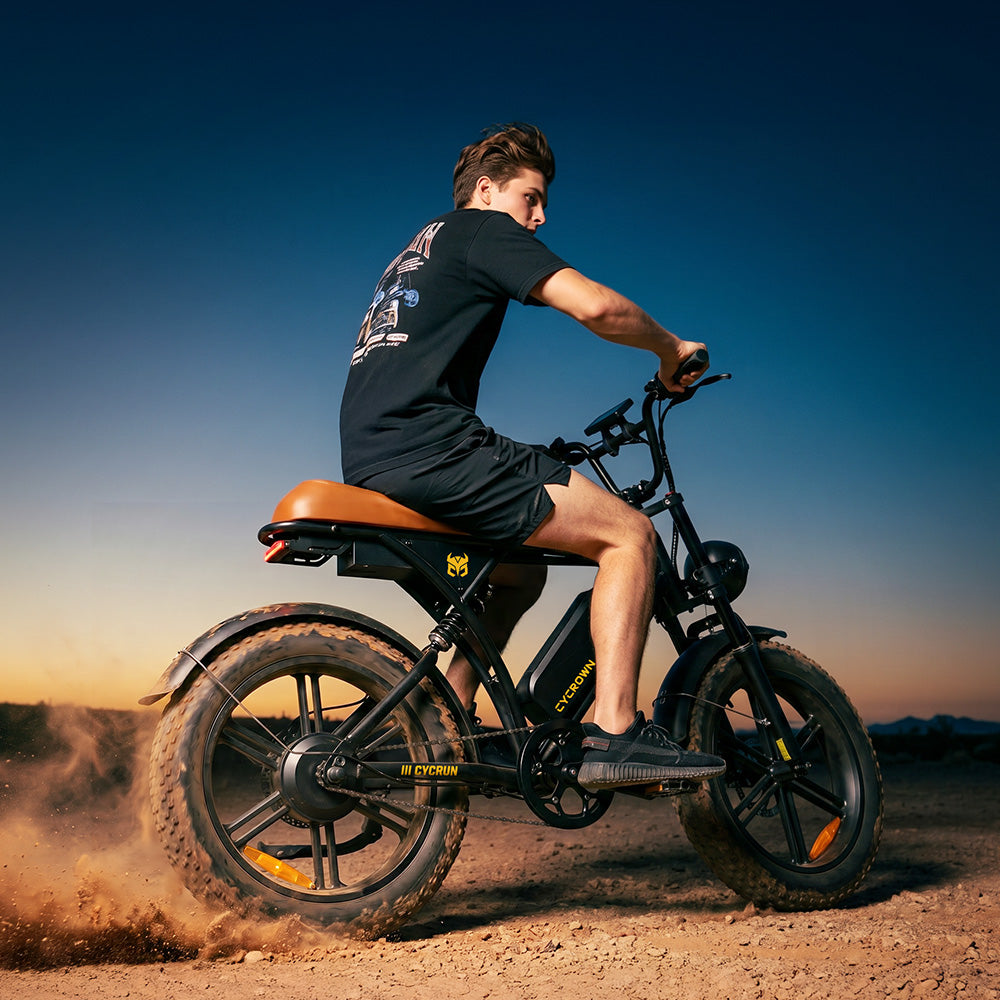
Most CYCROWN e-bikes use hub motors, meaning the motor is housed inside the front or rear wheel hub. During normal operation, these motors produce a smooth, consistent hum that naturally increases in pitch as speed rises. This sound comes from the electromagnetic field cycling through the motor's windings and is a normal part of e-bike operation. On models such as the CycHunter, the hub motor's sound is generally subtle and unobtrusive, making it quieter than many higher-powered mid-drive systems while still delivering strong acceleration and reliable performance.
Pitch changes under pedal assist.
When the motor engages to assist your pedaling, particularly on a hill or when accelerating from a stop, the pitch increases as the motor draws more current. This is a normal load response, not a mechanical issue.
Chain and drivetrain sounds are mixing with motor sounds.
On pedal-assist e-bikes, the chain, derailleur, and gears all contribute to overall riding noise. What sounds like motor noise is often actually drivetrain feedback. Keeping the chain lubricated and gears properly adjusted eliminates most of this.
Temperature-related sounds.
On cold mornings, particularly in northern U.S. states like Minnesota or Michigan, e-bike motors may sound slightly different for the first few minutes of riding as components warm up. This normalizes quickly and isn't a concern.
Warning Signs That Need Attention

These sounds are different from normal operational noise and warrant investigation:
Grinding - a rough, mechanical grinding from the motor or wheel area suggests debris inside the motor housing, a bearing failure, or components making unintended contact. Don't ride on this; address it promptly.
Clicking at regular intervals - a click that matches wheel rotation speed (faster as you speed up, slower as you slow down) is almost always a bearing issue, debris in the tire, or a loose spoke — not the motor itself. A click that doesn't match the rotation speed may indicate a motor controller or electrical issue.
Sudden change in motor pitch without terrain change - if the motor suddenly sounds different on the same surface at the same speed as before, something has changed internally. Stop and investigate.
Progressive whining that gets louder over time - a gradual increase in a high-pitched whine typically indicates bearing wear. Bearings that are caught early are inexpensive to replace; bearings left until they fail can damage surrounding components.
Rattling from the motor housing - loose internal components or fasteners in the motor housing create a rattle under load. This is distinct from frame or rack rattles, which are more common and less serious.
Motor running hot after normal rides - some warmth after demanding riding is expected. Sustained heat after a routine flat ride signals the motor is working harder than it should, often due to a mechanical or electrical issue.
How to Diagnose Where the Noise Is Coming From
Before assuming the motor is the culprit, a simple diagnostic process narrows things down significantly.
Isolate by speed.
If the noise appears only at specific speeds and disappears at others, it's likely resonance from a loose component rather than a motor problem. Check bolts throughout the frame: the rack, fenders, and handlebars are common rattle sources that riders mistake for motor issues.
Check rotation-linked rhythm.
A clicking or ticking that speeds up and slows with your wheel rotation is almost certainly a tire, spoke, or bearing issue rather than motor-related. Inspect the tire for embedded debris and check spoke tension.
Test without pedal assist.
If you can freewheel downhill with the motor off and the noise disappears, the motor is involved. If the noise persists without motor engagement, the source is mechanical, or it’s within the chain, bearings, or frame components.
Listen during different assist levels.
A noise that only appears at pedal assist level 3 or higher but not at level 1 or 2 suggests the motor is being pushed hard. Or, it’s possibly due to the motor working against mechanical friction somewhere in the drivetrain.
For a thorough guide on brake noise specifically — which often gets confused with motor noise — Cycrown's complete bike brakes guide covers the diagnostic process in detail.
Simple Maintenance That Prevents Most Noise Issues
Monthly checks that protect your motor:
Inspect the wheel axle nuts - loose axle nuts on hub motor wheels are one of the most common sources of unexpected clicking and rattling.
Check spoke tension on motor wheels - loose spokes cause clicking that travels through the rim and sounds like it's coming from the hub.
Keep the chain clean and properly lubricated - chain noise on pedal-assist modes is easily mistaken for motor noise.
Inspect tire treads for embedded debris - small rocks and glass fragments cause rotation-linked clicking that sounds mechanical.
Check that the motor cable connections are secure - loose connections cause intermittent noise and power issues simultaneously.
Most e-bike motor noise that develops over time is due to neglected maintenance rather than a motor failure. Riders who run monthly checks on their Cycrown CycHunter or Roma Fat Tire E-Bike consistently report fewer unexpected noise issues than those who ride and rarely inspect.
When to Keep Riding and When to Stop
Keep riding if the sound is a stable, consistent hum that behaves predictably with speed and load, sounds the same as it always has, and matches the operational description for your motor type.
Stop and investigate if grinding appears suddenly, a new clicking develops, the motor pitch changes without any change in conditions, or power becomes inconsistent alongside noise.
Seek professional service if grinding or unusual noise persists after you've checked all the mechanical components, the motor area feels warm after a normal flat ride, or power loss accompanies any of the above. Hub motor internal repairs typically require a bike shop with e-bike experience. Attempting DIY internal motor work without the right tools can create more problems than it solves.
Your Motor Tells You Things. Listen to It
The best diagnostic tool you have for your e-bike is knowing what it sounds like when everything is right. Changes from that baseline, new sounds, louder sounds, irregular patterns, are the motor's way of signaling that something has shifted. Riders who pay attention to those changes and address them early almost always avoid the expensive repairs that come from ignoring them long enough.
If you have any questions, require assistance or technical support after your purchase, you may contact the After Sales Team. Contact the online store/local store service here: vip@cycrown.com. For Best Buy/Target Marketplace Service, contact support@cycrown.com.
It’s best to include your order number in the subject to process your email more efficiently.
What Bikers Want to Know
Is it normal for an e-bike motor to hum loudly on hills?
Yes. Increased pitch and volume on inclines are a normal load response, as the motor draws more current to assist with climbing.
My e-bike makes a clicking sound when I pedal. Is that the motor?
Pedaling-linked clicking is usually a drivetrain issue involving the chain, pedal bearings, or bottom bracket, rather than the motor itself; lubricate the chain and check pedal tightness first.
What does grinding from the rear wheel area mean on an e-bike?
Grinding near the rear hub motor suggests bearing wear, debris inside the housing, or a loose axle nut — stop riding and inspect before further damage occurs.
Why does my e-bike motor sound different in cold weather?
Cold temperatures temporarily thicken lubricants and affect how components move together; the sound typically normalizes within a few minutes of riding as the motor warms up.
How do I know if my e-bike motor noise is serious or just normal?
Compare it to your established baseline. A new sound that appears suddenly, gets progressively louder, or is accompanied by reduced power is serious; a stable, consistent hum that's always been there is not.


