





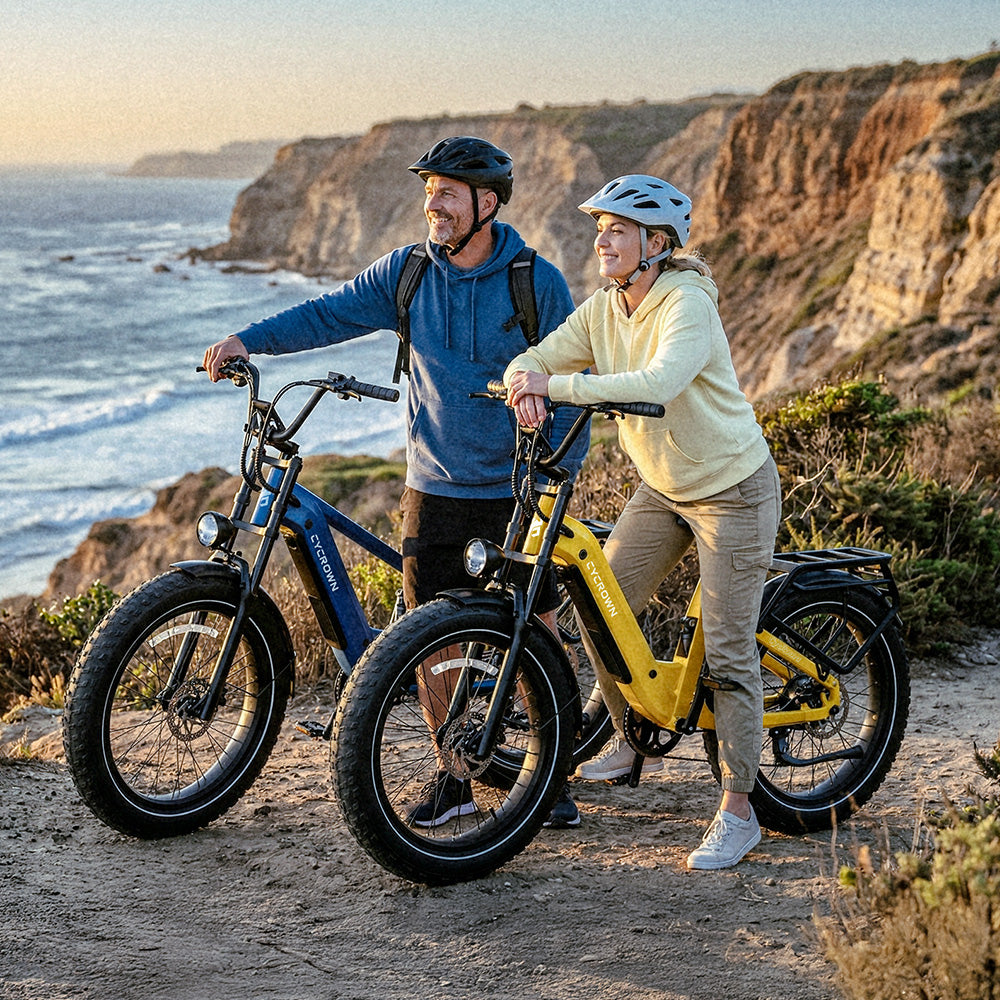
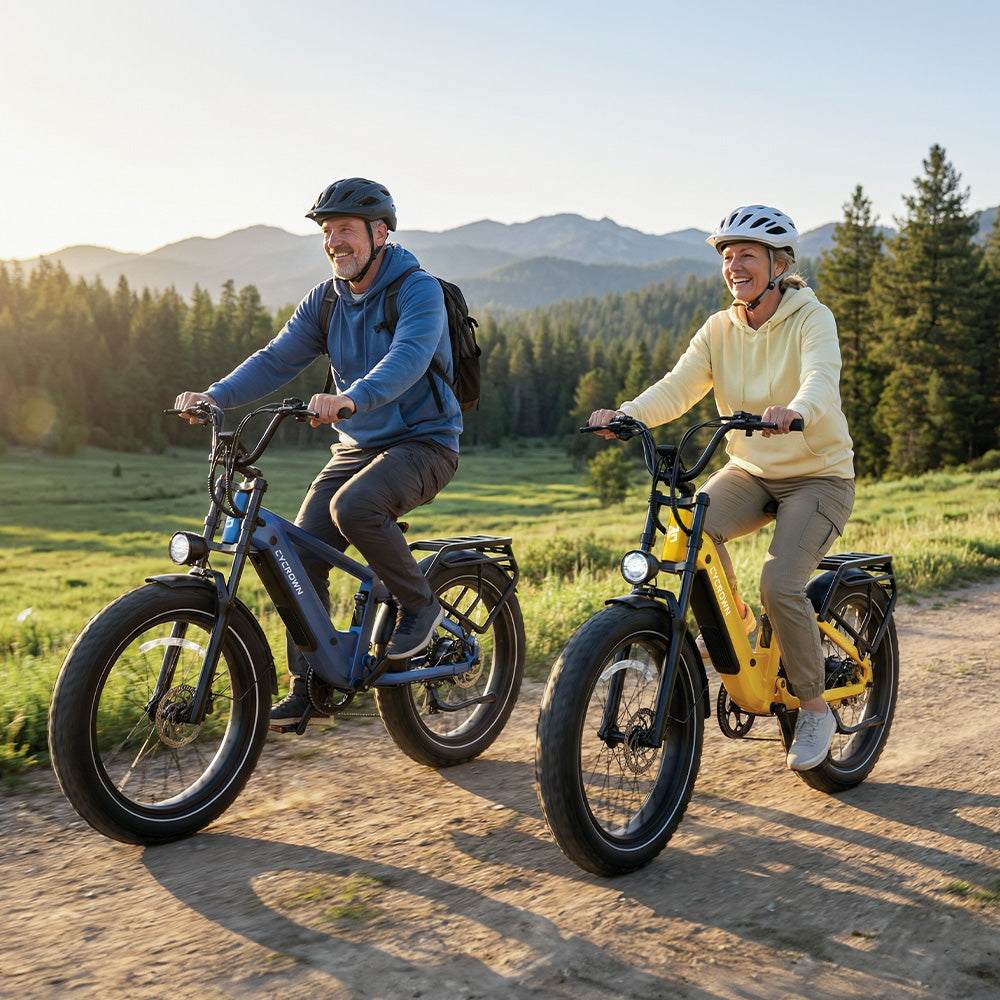
Find out how far an electric bike can go on one charge and the factors that affect its range, as well as practical tips to extend battery life for more rides.
Introduction
An electric bike (e-bike) can ride for 20 to 80 miles or 32 to 130 kilometers on a single charge based on factors such as battery size, terrain, the weight of the rider, and pedal assist level. Other high-end models could even go beyond 100 miles under ideal conditions. Learning what influences this range helps you manage and plan your rides better and maximize your e-bike’s full potential.
What Determines an Electric Bike’s Range?
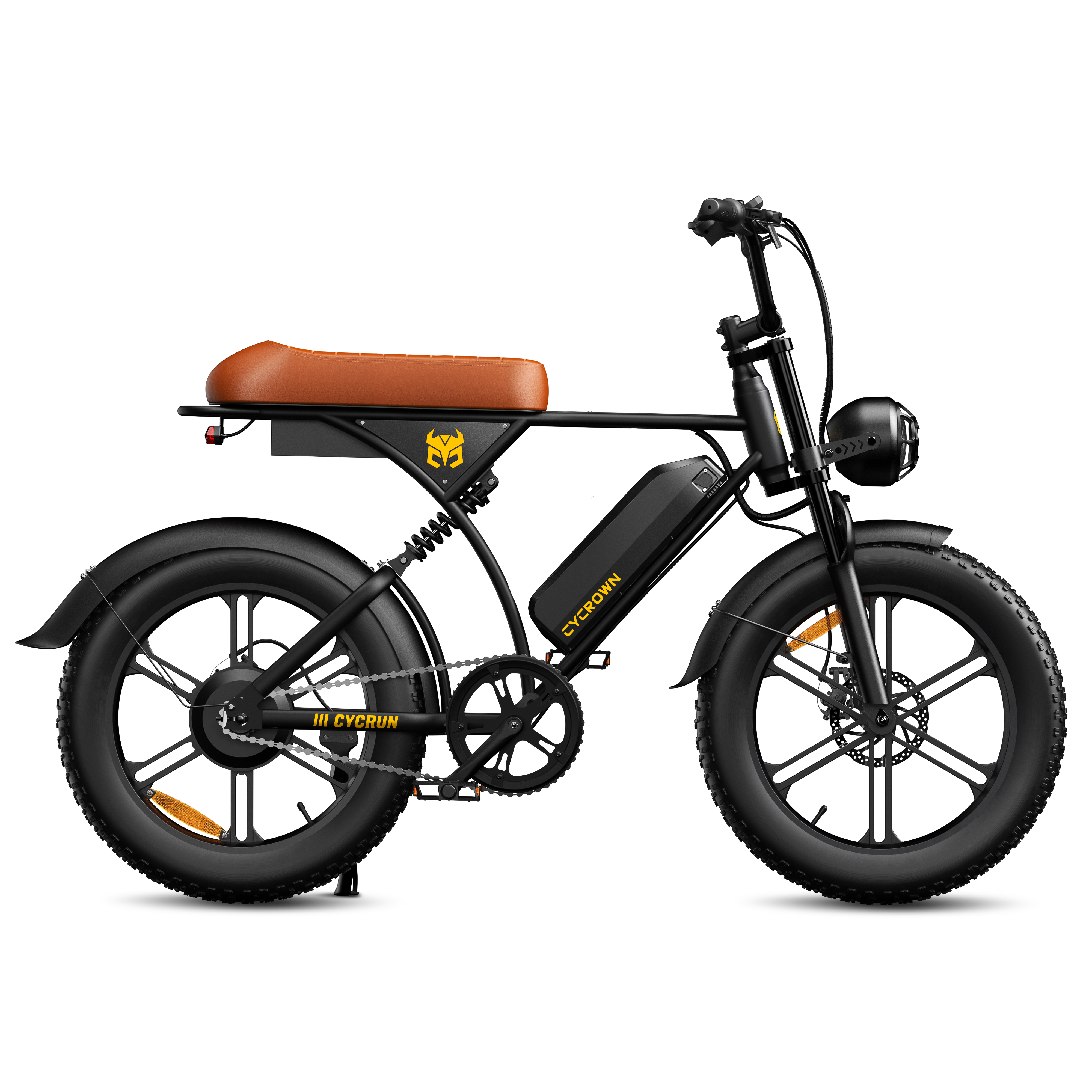
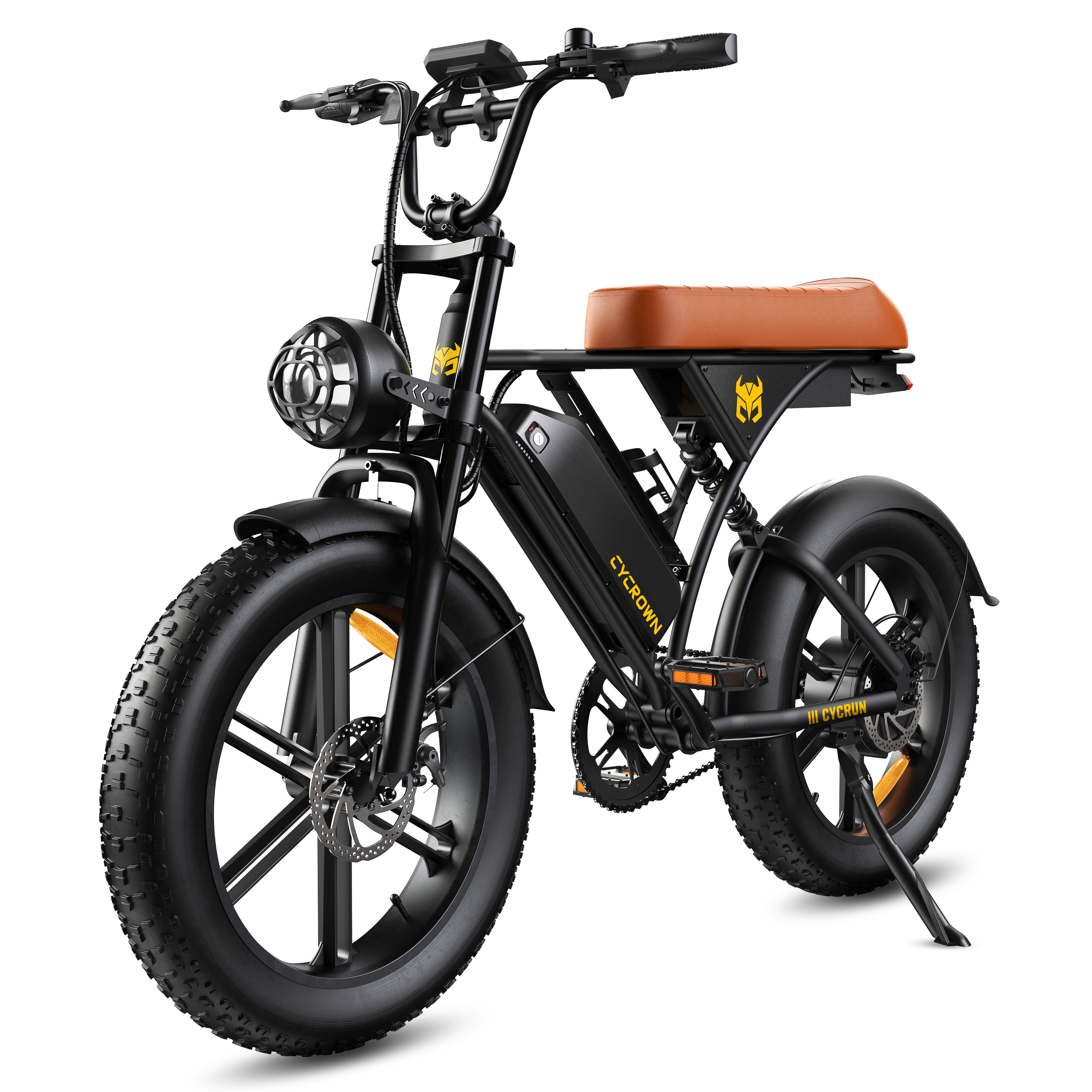
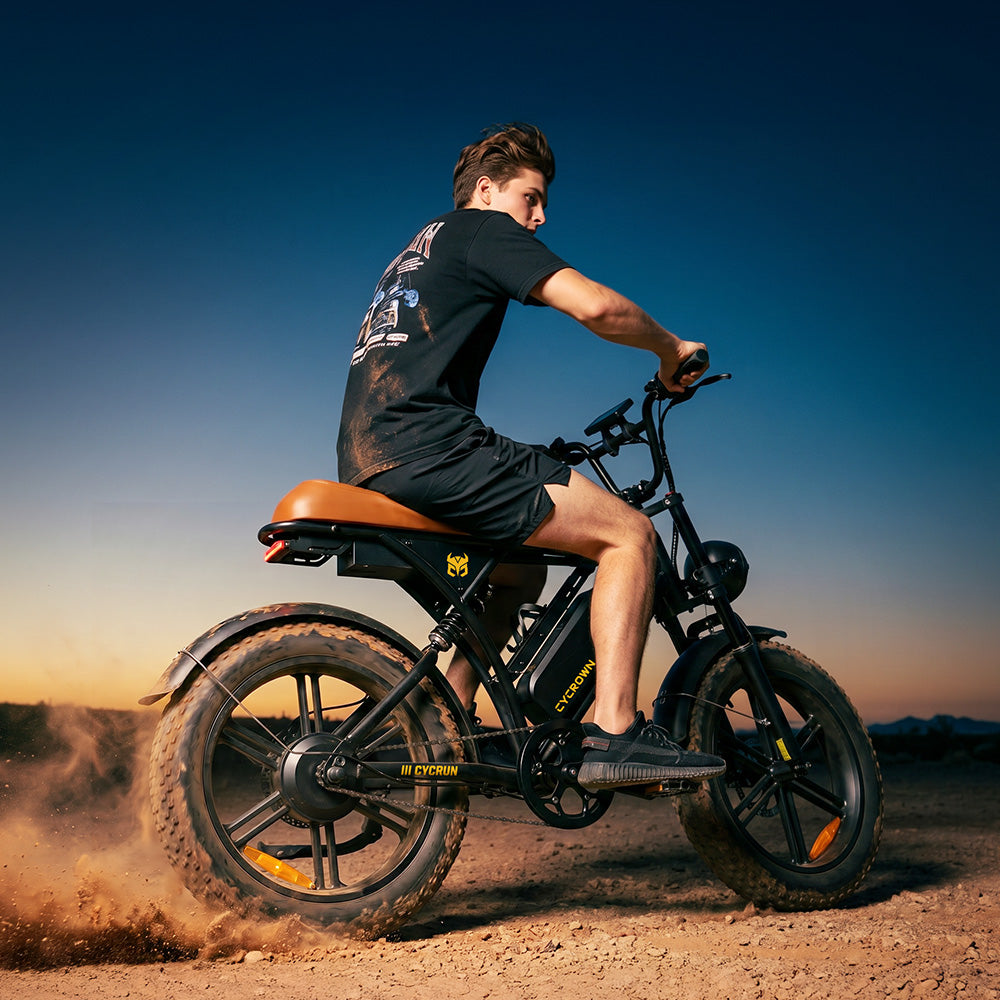
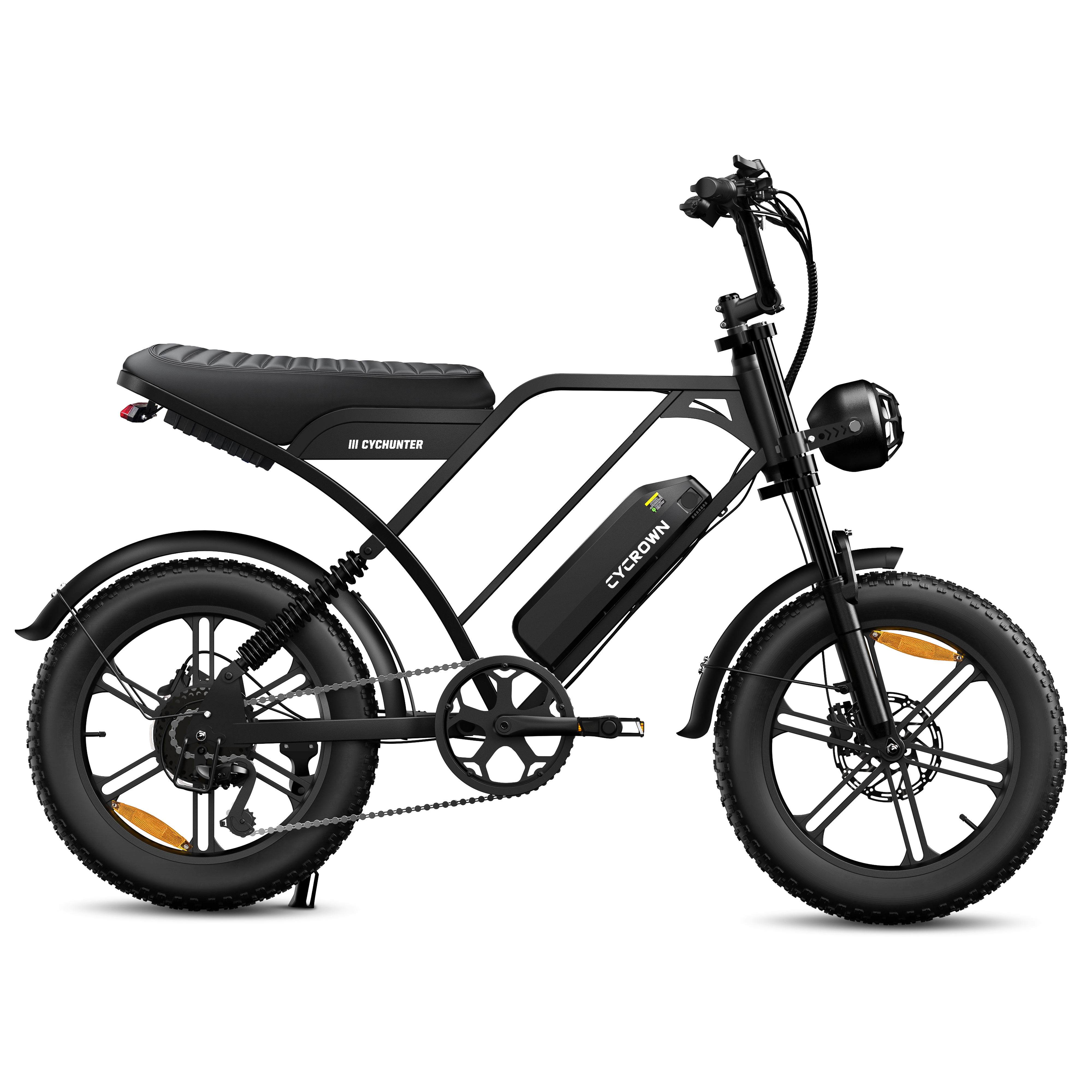
 (CynRun)
E-bike rage is not exactly fixed as it can be shaped by real-world conditions. Below are some of the main factors that affect how far you can go on a single charge.
Battery Capacity
A battery’s capacity might be the biggest factor that determines range. Its capacity is commonly measured in watt-hours or Wh.
Take note of this.
-
A 250 W battery can go for 15-30 miles.
-
For a 500Wh battery, it may drive for up to 30-60 miles
-
While a 750Wh+ battery could travel up to 60-100 miles
Which means, the higher the capacity, the more energy it has for longer rides.
Other Factors that Can Affect Range
Terrain and Elevation
Terrain can massively impact how far your e-bike can travel on one charge, while flat roads allow longer and battery-friendly rides, especially on continuous climbs.
As for rough trails, loose gravel, and uneven surfaces can spike up resistance. This could force the motor to exert more effort and bring down overall efficiency.
For example, a route with frequent or steep inclines can cut your total range by as much as 20-40%, depending on riding conditions.
Weight and Cargo
The weight of the rider, along with the cargo carried play a significant role in how far your e-bike can travel on one charge.
If heavier loads require more motor energy, lighter loads could buy you more distance and improve battery usage.
However, even small weight increases can wear down your bike when it comes to longer rides or uphill climbs since the motor still needs to work more to maintain speed and performance.
Weather Conditions
Weather plays a surprisingly big role. For example, headwinds may increase resistance and cold temperatures might decrease battery efficiency, and driving in the rain could slow down your bike and degrade performance.
Pro tip: Ride during an ideal weather to avoid any possible mechanical issues on your e-bike’s performance.
Riding Modes (Pedal Assist or Throttle Only)
The way you utilize your e-bike matters as much as the battery itself.
When you use pedal assist mode, it helps extend your range since you also contribute to the effort with the motor.
On the other hand, the throttle-only mode could drain the battery significantly faster since you leave all the work to the motor.
A good tip to follow when you want to maximize distance is to use lower assist levels.
How You Ride Your E-Bike Matters
Which is better? City riding or Off-Road riding? Let’s find out.
City Riding has smoother roads, fewer changes in elevation, but it has frequent stops due to more traffic lights and pedestrians. Its average range is 40-70 miles.
For Off-Road riding, there are rough terrains, steep climbs, and higher resistance but its typical range is 20-50 miles.
Average Electric Bike Range (Comparison Table)
Here’s a simple comparison to give you a better idea of what to expect:
|
Battery Size |
Riding Style |
Estimated Range |
|
250Wh |
Light pedal assist |
15–30 miles |
|
500Wh |
Moderate assist |
30–60 miles |
|
750Wh |
Mixed riding |
50–80 miles |
|
1000Wh |
Efficient riding |
80–120+ miles |
Although these are general estimates, they help illustrate how range scales with battery size and riding habits.
Real Example: Calculating E-Bike Range
Let’s break it down with a simple example.
Imagine you have a 500Wh battery, and your e-bike consumes about 10Wh per mile under moderate conditions.
Calculation:
-
500Wh ÷ 10Wh per mile = 50 miles of range
However, if you:
Ride uphill frequently → consumption may increase to 15Wh per mile
Use throttle often → consumption rises even more
Then your range becomes:
-
500Wh ÷ 15Wh = about 33 miles
This shows how riding style and terrain can significantly impact your actual distance.
How to Maximize Your E-Bike’s Range

If you want to make the most of your e-bike’s range after charging once, take note of these helpful habits to increase range by 10-30% or more.
-
Use lower pedal assist levels whenever possible
-
Maintain a steady speed instead of frequent acceleration
-
Keep your tires properly inflated
-
Avoid carrying unnecessary weight
-
Shift gears efficiently (just like a regular bike)
-
Charge your battery regularly but avoid overcharging
-
Store the battery in a cool, dry place
How Battery Age Can Affect Range
The more you use your e-bike, the more it could lose some of its initial capacity. After about 1-2 years of regular use, you might see a small dip in range even though your riding habits are consistent.
By year 3 or 5, its over capacity might lower by approximately 20-30% based on factors like how frequent you use it, charging habits, and how you store your bike.
In addition, other factors like extreme temperatures, full discharges, and poor charging can accelerate its weakening process.
In order to extend battery life, make sure you follow these proper care practices.
-
Avoid fully draining the battery frequently
-
Don’t leave it at 100% charge for long periods
-
Keep it away from extreme heat or cold
For more detailed care tips, check out this article on how to charge and maintain your e-bike battery.
Is It true? The Longer Range the Better?
Not necessarily. Although when you hear the term “longer range” it sounds appealing. But it often comes with trade-offs.
Longer range usually means larger batteries, which are far more heavy than standard ones. This could ramp up motor work, which could lead to charging more.
Do I need a longer range? Probably not if you are a regular commuter. Most riders’ range are 40-60 miles, which is more than enough for daily commute or weekend rides.
But if you’re choosing your first e-bike, understanding your needs is more important than simply going for the biggest battery. You can learn more in this helpful guide on choosing the best electric bike that could accommodate all your transport needs.
Conclusion
Let’s recap. How far can an e-bike go on one charge? On average, you can expect 20-80 miles while some models could reach up to 100 miles under ideal conditions. Your e-bike’s range may vary depending on battery size, riding style, terrain, and weather conditions.
By understanding these factors and making small adjustments, like using pedal assist wisely and maintaining your bike, you can significantly extend your riding distance. Whether you’re commuting, exploring trails, or just enjoying a ride, knowing your e-bike’s range helps you plan with confidence and get the most out of every charge.
FAQ
Can an electric bike go 100 miles on one charge?
Yes, some high-capacity e-bikes can reach 100 miles or more, especially when using low pedal assist and riding on flat terrain
How long does it take to charge an e-bike battery?
Most e-bike batteries take 3 to 6 hours to fully charge, depending on their size and the charger used.
Does using throttle drain the battery faster?
Yes, throttle-only riding uses more power because the motor does all the work, reducing overall range.
How can I tell how much range I have left?
Most e-bikes include a display showing battery level, and some estimate remaining range based on your riding conditions.
Do electric bikes lose range over time?
Yes, batteries gradually lose capacity as they age, but proper care can help maintain performance for several years.


