







Find the perfect e-bike for adults with this simple guide. Learn how to choose the right fit based on comfort, power, and daily riding needs.
The Right E-Bike Isn't the Most Powerful One. It's the One That Fits Your Life.
Walk into any e-bike conversation, either online or in person, and you'll hear people debating motor wattage, battery specs, and top speed within about thirty seconds. And while those things matter, they're not where the decision should start. Plenty of people have bought technically impressive e-bikes that ended up collecting dust because the fit was wrong, too heavy to carry upstairs, too aggressive a riding position for a casual commute, or too powerful for the flat city roads they actually ride.
The better question isn't "what's the best e-bike?" It's "what's the best e-bike for how I actually live?" That shift in framing changes everything about how you shop.
Your Riding Style Is the Starting Point
Before you look at a single spec, be honest about how you'll actually use this thing, not how you imagine yourself using it on a good day, but day-in, day-out, year-round.
Commuters need reliability above all else. A bike that handles stop-and-start traffic smoothly, has enough range to cover the round trip without anxiety, and doesn't leave you sweaty and exhausted at the office.
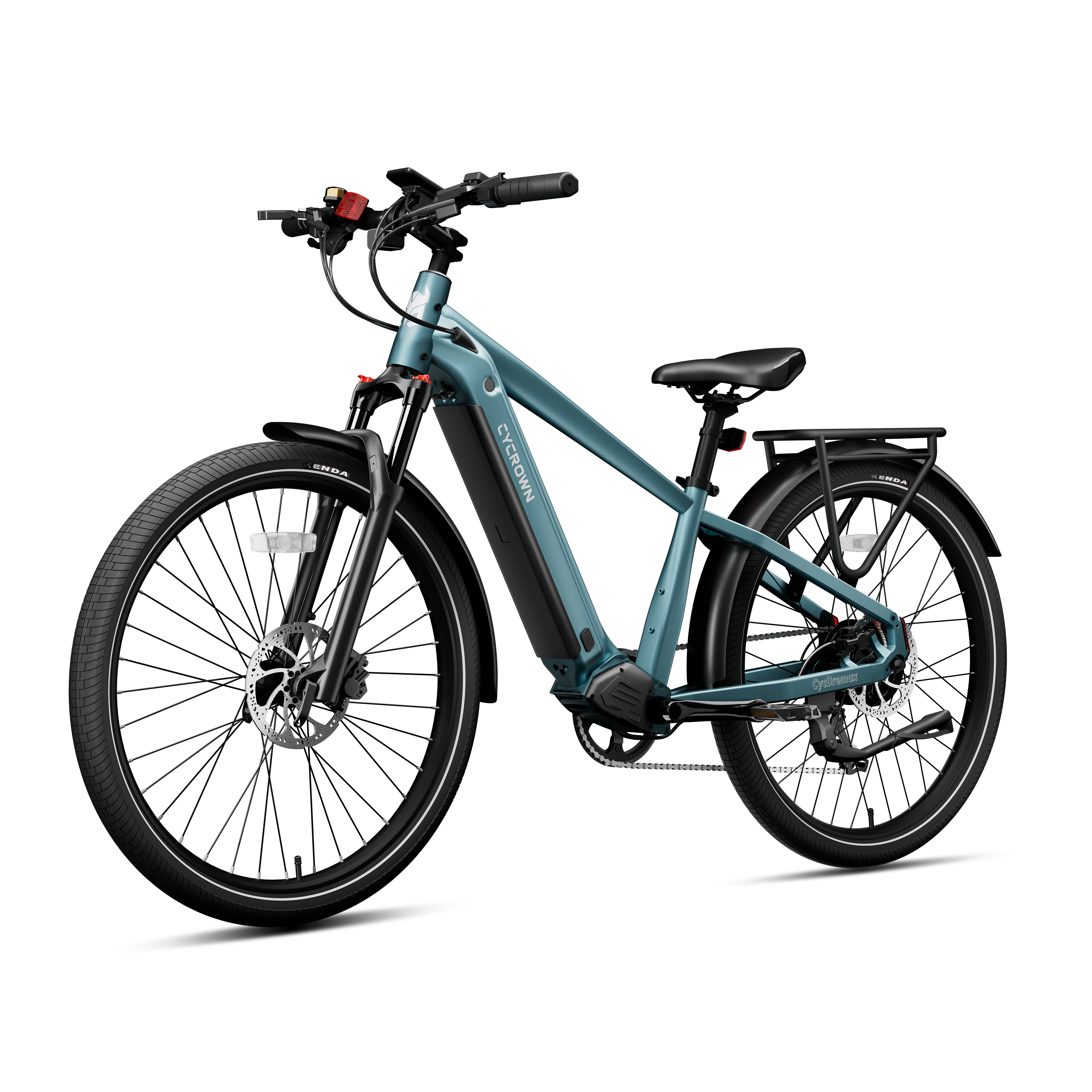
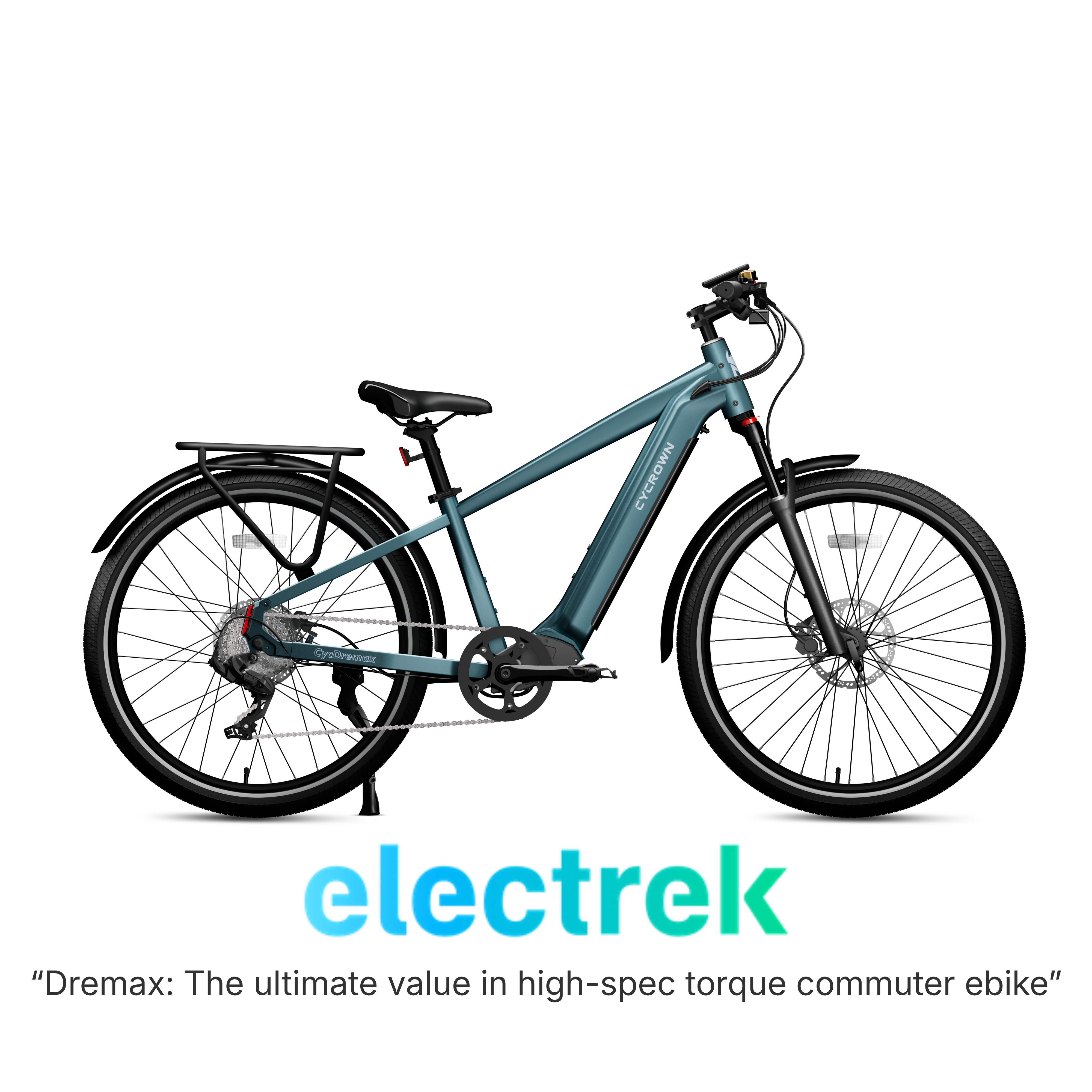
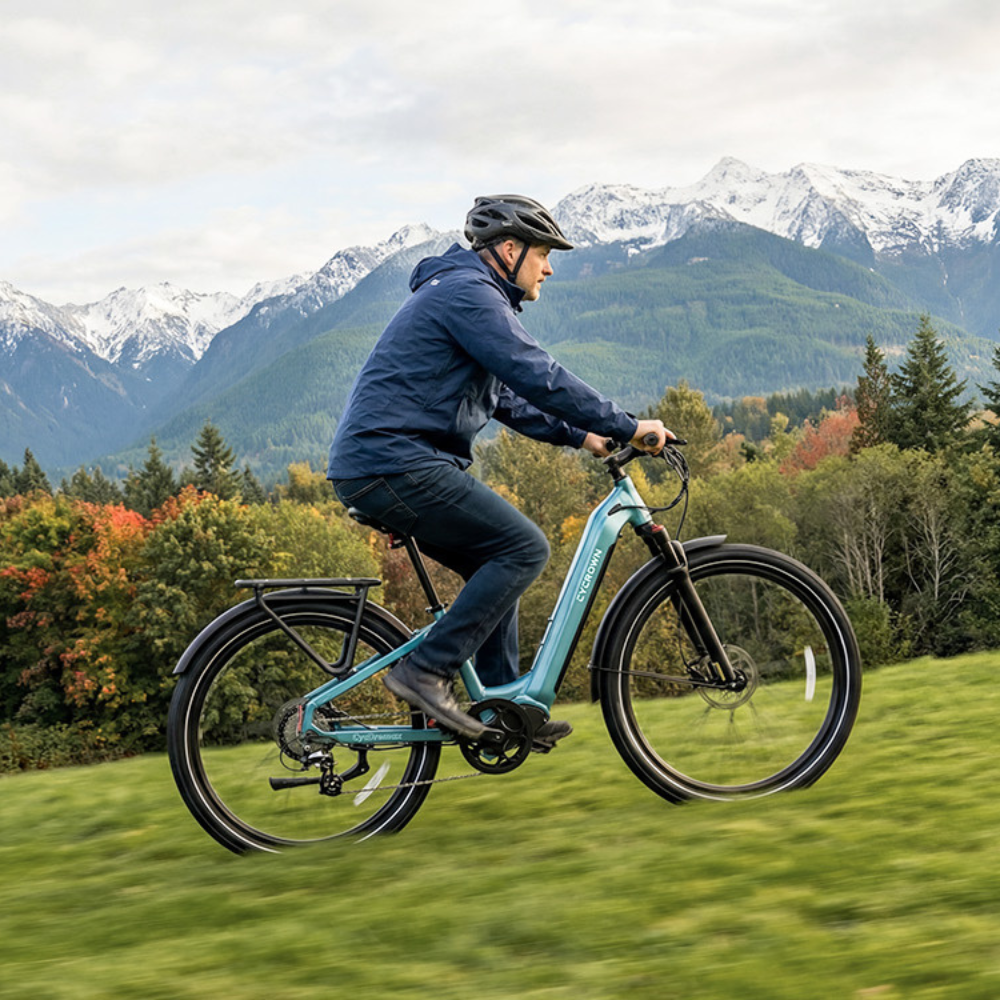
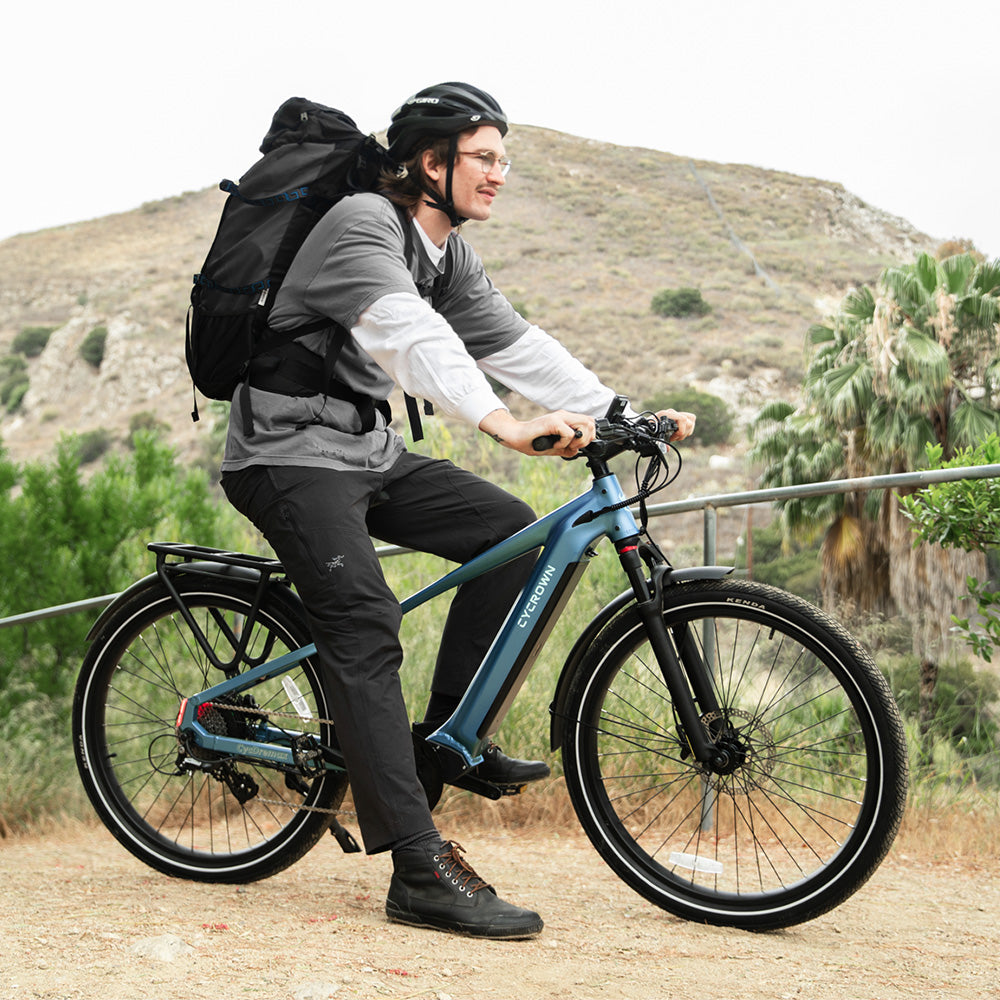
For this use case, the CYCROWN Dremax was designed with exactly these riders in mind. Its practical features, such as smooth urban performance and a comfortable upright riding position, are ideal for daily use.
Leisure and weekend riders have more flexibility. Comfort matters more than efficiency. A relaxed geometry, a cushioned ride, and enough range to handle a longer weekend loop without rushing home to charge would hit the brief. You're riding for the enjoyment of it, so the bike should feel like a treat, not a workout.
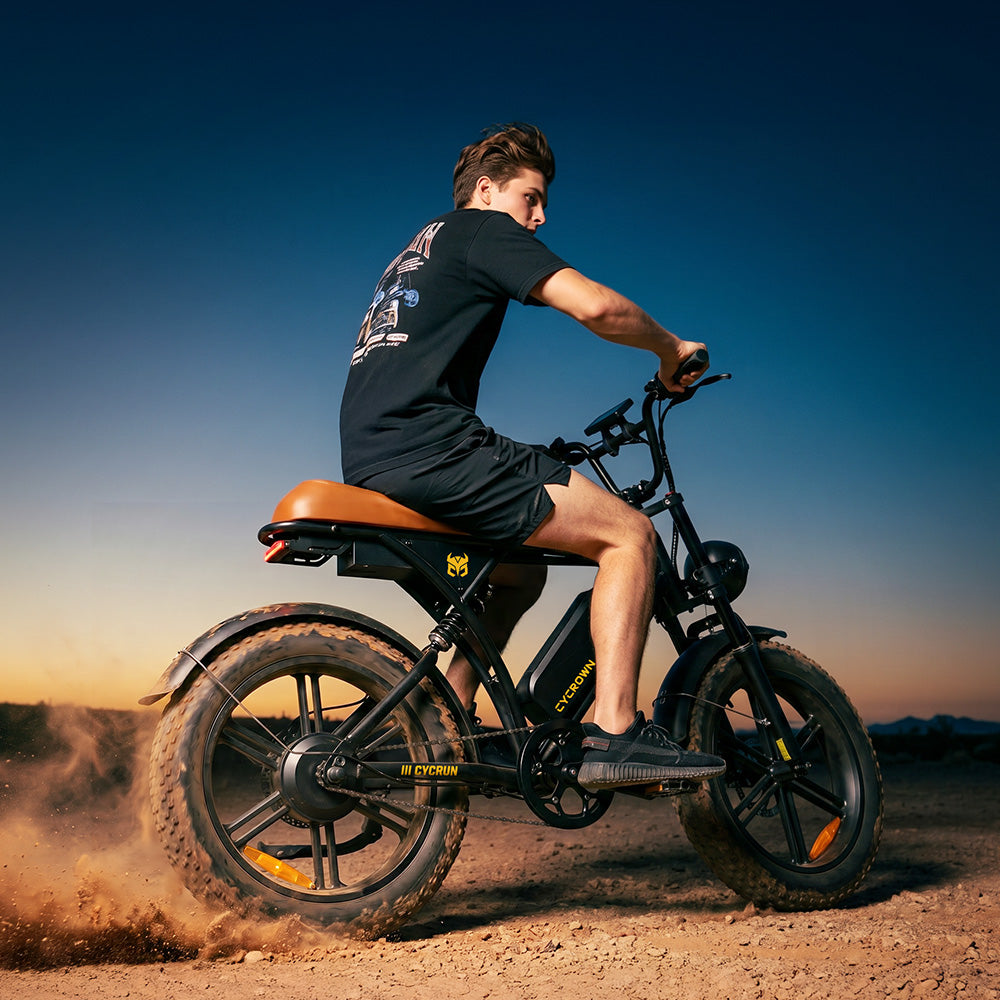
Mixed-terrain and adventure riders need something that won't flinch when the road gets rough. Wider tires, real suspension, and a motor strong enough to handle hills and varied surfaces without straining. If your weekday commute turns into a trail ride on weekends, you want a bike that genuinely crosses both worlds rather than just claiming to.
The Type of E-Bike Actually Matters More Than the Specs

Once you know how you ride, the type of bike narrows the field considerably.
Commuter e-bikes
These are optimized for urban use. They are lighter, more maneuverable, efficient on pavement, and often designed with practical touches like integrated lights, fenders, and rack mounts. If you're riding to work most days, this category is where to look first.
Fat-tire e-bikes
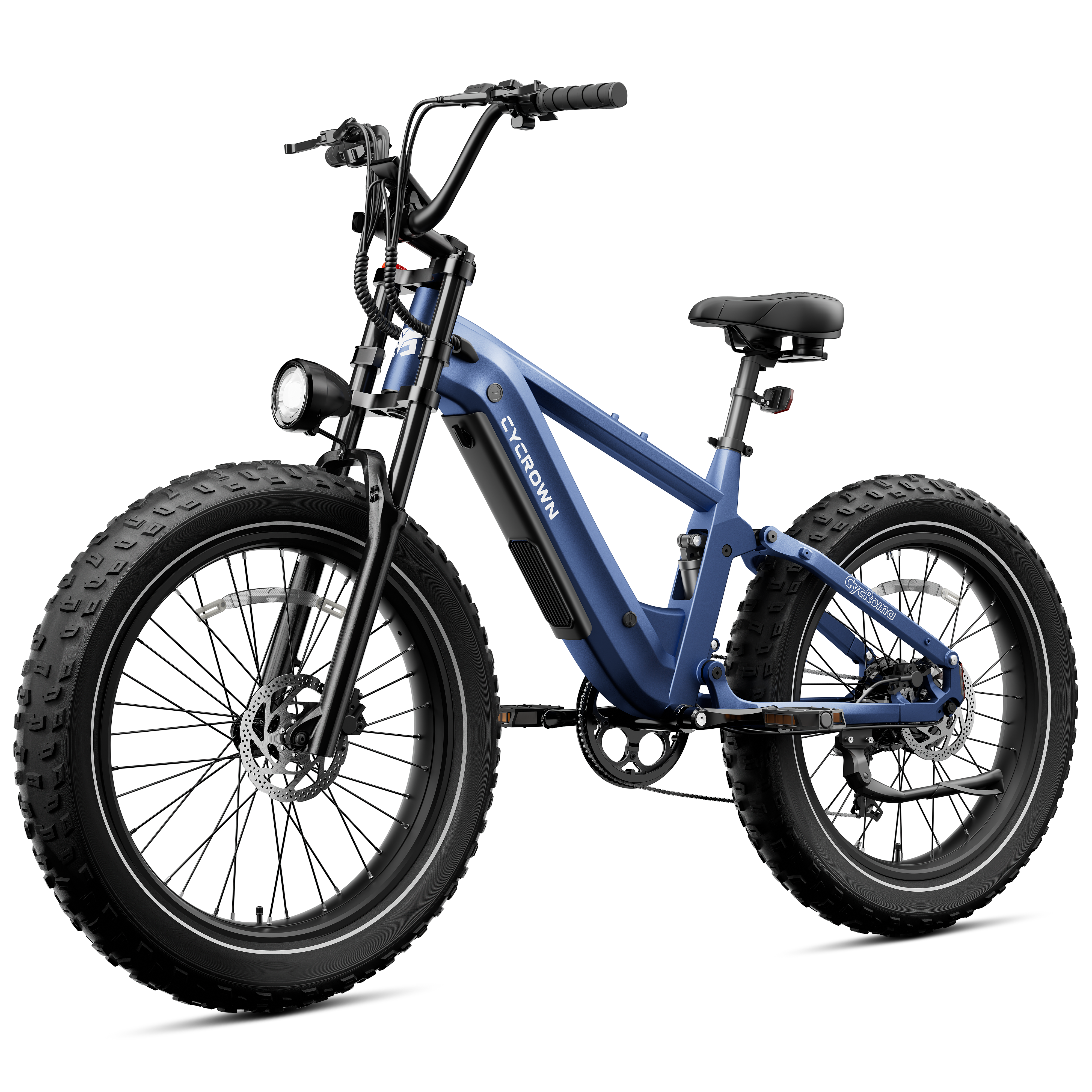
They are for riders who want genuine versatility. The wider tires aren't just aesthetic, but they absorb vibration, grip better on loose or uneven surfaces, and give the bike a planted, confident feel that narrow tires can't match. The CYCROWN Roma is a strong example here, with an all-terrain build with a 90-mile range that handles city streets and rougher ground with equal composure. If your routes are unpredictable or you want one bike that does everything, a fat-tire bike is hard to beat.
Moped-style e-bikes
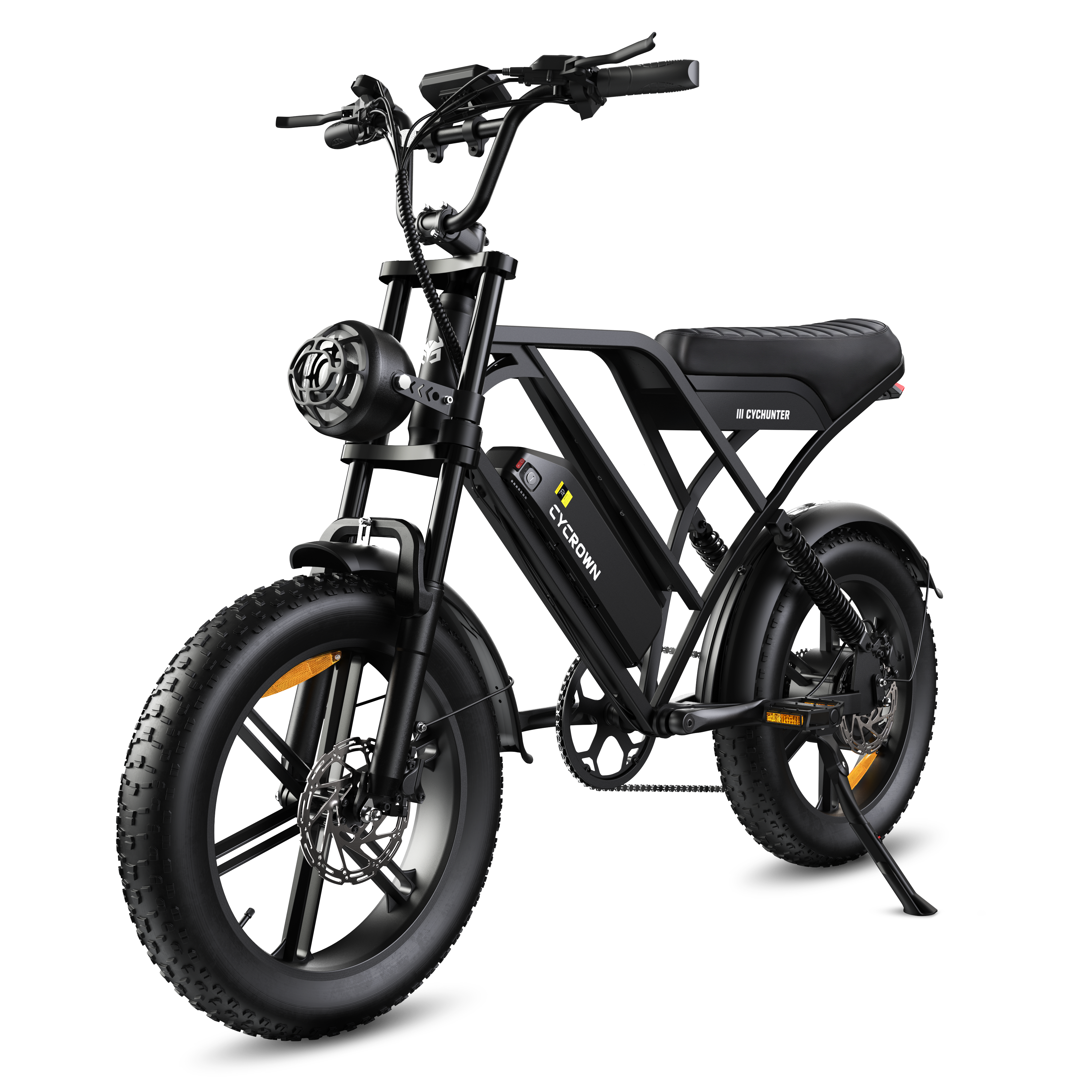
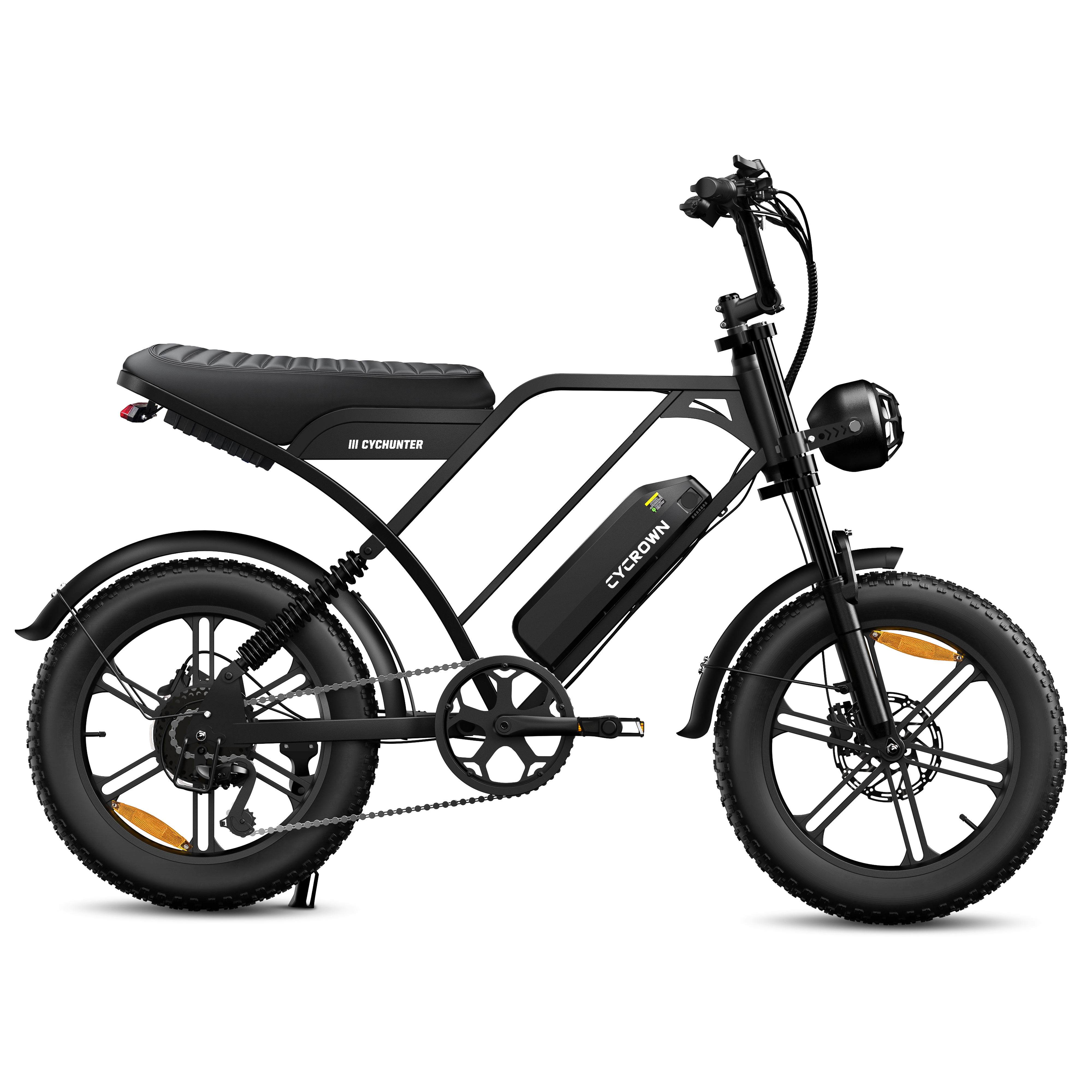
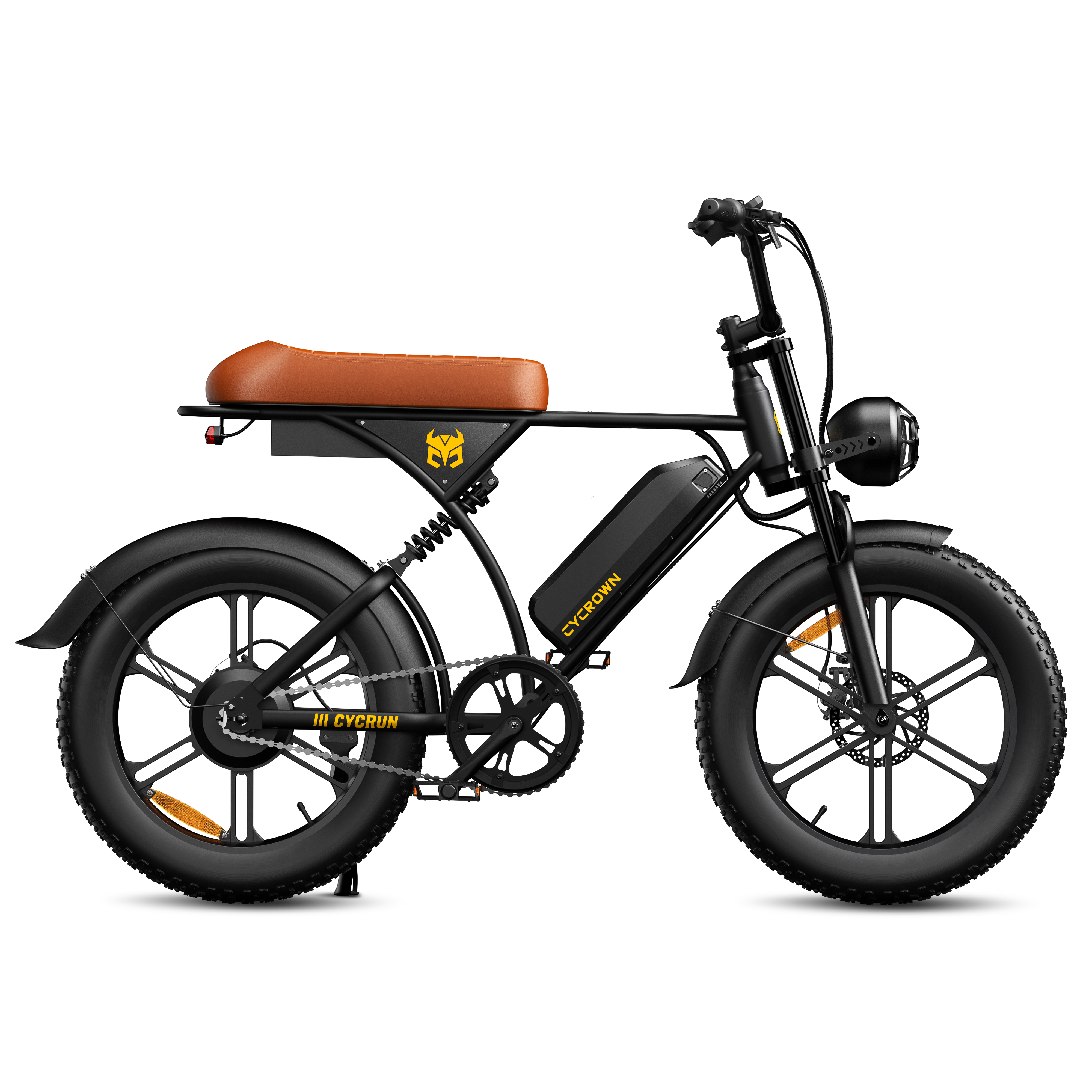
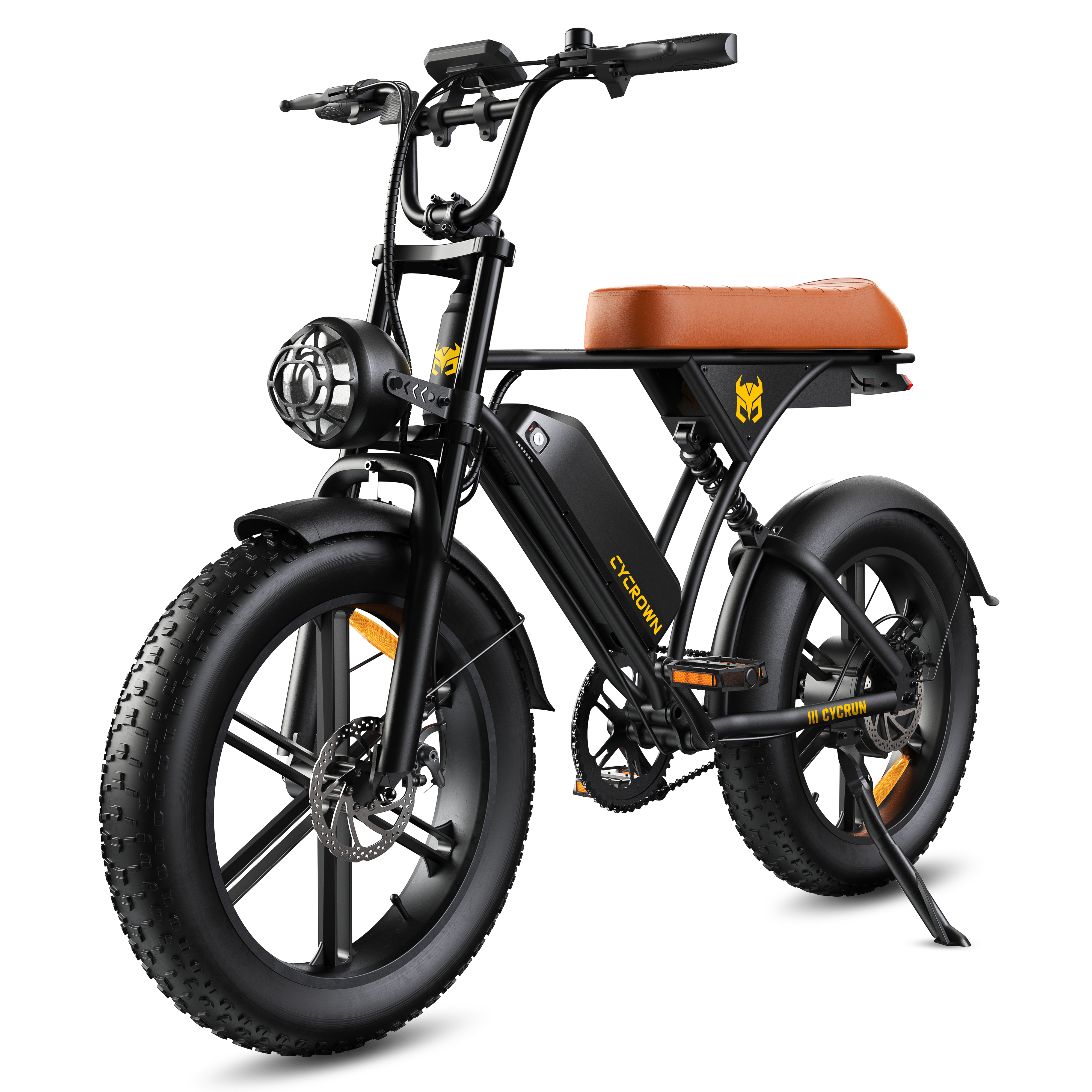
These lean into a different set of priorities: style, comfort, and a more relaxed riding experience. They tend to have a larger frame presence, throttle options alongside pedal assist, and an aesthetic that's genuinely appealing to ride. The CYCROWN CycHunter is CYCROWN's best-selling moped model, which is no surprise because it hits this sweet spot well. For riders who want something a step more compact and retro-styled, the CycRun brings similar vibes in a slightly smaller package.
Full-suspension e-bikes
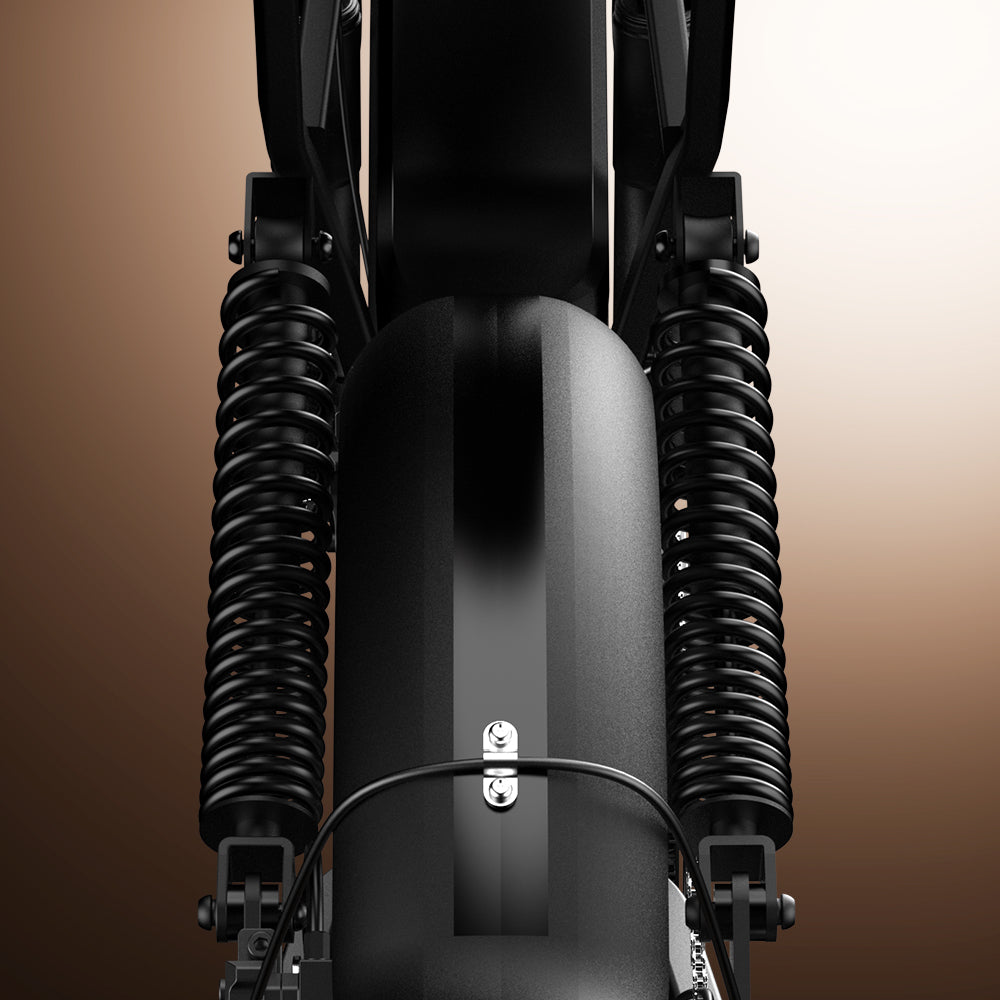
They are the choice when road quality is consistently rough, and comfort is a genuine priority. Dual suspension, front fork plus rear shock, absorbs the kind of cumulative vibration that makes longer rides exhausting. If you're covering a serious distance regularly or your terrain is legitimately bumpy, it's a feature worth prioritizing.
Comfort and Fit: The Stuff That Doesn't Show Up in Spec Sheets
This is where most online research falls short. You can read every review and compare every number, but you won't know how a bike feels until you consider how it fits your body and your habits.
Frame geometry determines your riding position. An upright position is more relaxed and comfortable for most daily riders. Even when you're sitting, not hunched. A more forward-leaning position is aerodynamically efficient but harder on your back and wrists over longer rides. Think about what you'll actually appreciate after a 45-minute commute, not just the first ten minutes.
Seat height and handlebar reach matter more than people realize. A bike that's even slightly too large or too small creates constant low-level discomfort that adds up over time. Most e-bikes accommodate a decent range of rider heights, but checking the recommended height range before buying is a step worth taking.
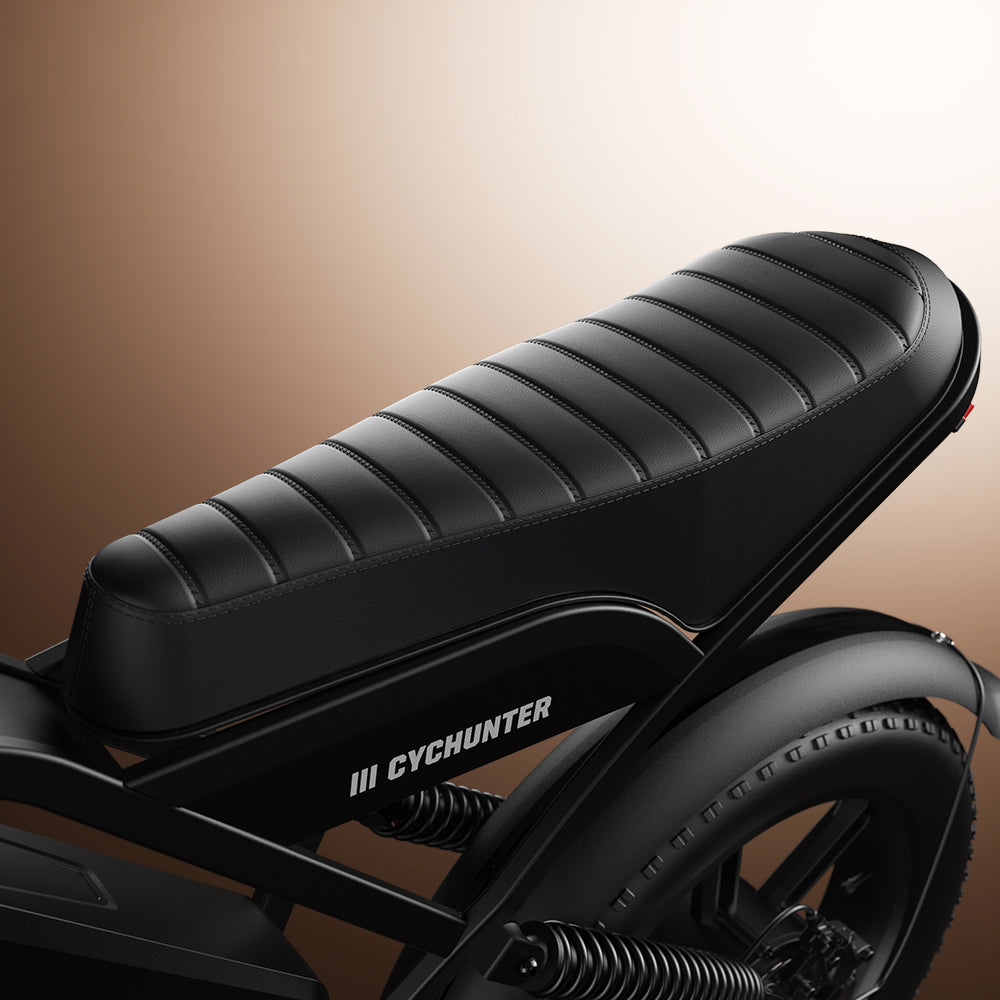
The deck and handlebars’ feel on longer rides. Ergonomic grips reduce hand fatigue. A well-padded saddle makes a meaningful difference on a 30-minute daily commute. These details seem minor when you're shopping, but they're what determine whether you actually enjoy riding the bike six months in.
Power, Pedal Assist, and What You Actually Need

Motor power has become the number everyone compares, but it's worth understanding what it means in practice before optimizing for maximum wattage.
For flat urban commuting, a 500-750W motor is perfectly adequate and delivers a smooth, responsive ride without feeling like overkill. Where motor strength genuinely matters is on hills, heavy loads, and sustained performance. If you're regularly climbing, carrying cargo, or riding in conditions that demand consistent torque, stepping up to 1000W or higher makes a real difference. CYCROWN's lineup includes models with motors up to 1500W for riders who need that power ceiling.
Pedal assist is the feature that makes e-bikes genuinely useful for daily riding. It amplifies your effort rather than replacing it, which means you arrive less sweaty, ride longer without fatigue, and can dial back the assistance on days when you want a real workout. Throttle control adds flexibility, letting you cruise without pedaling when you want to. Having both is ideal. CYCROWN covers this in detail in their post on the health benefits of pedal assist. It’s especially worth reading if you're curious about how much physical activity you'll actually get.
Battery and Range: Honest Numbers Matter
Advertised range numbers are always best-case: lighter rider, flat road, lower assist, ideal temperature. Your real-world range will be lower depending on your weight, terrain, how hard you lean on the motor, and the weather.
A practical rule: choose a bike whose rated range comfortably exceeds your actual daily distance by at least 30 to 40%. That buffer accounts for real conditions and means you're never doing mental math mid-ride. For more on what actually affects how far your battery takes you, CYCROWN's guide on how far an electric bike can go on one charge breaks it down clearly.
Removable batteries are worth prioritizing if your parking situation means you can't bring the whole bike indoors to charge. Being able to pull the battery and carry it to an outlet is a small convenience that prevents a lot of frustration.
Safety Features Worth Paying Attention To
This is the category where cutting the budget tends to cost you more in the long run, both financially and in confidence on the road.
Hydraulic disc brakes are the gold standard for adult e-bikes. They provide consistent, responsive stopping power regardless of weather and require less hand force than mechanical discs. On a bike that can hit 20+ mph, the difference in stopping distance matters.
Integrated lighting or proper front and rear lights, not add-on accessories, is a practical must for anyone riding outside of perfect daylight conditions. Brake-activated taillights are a particularly useful feature that more riders should pay attention to.
Tire quality and tread pattern affect both grip and puncture resistance. Air-filled tires handle varied surfaces and absorb road vibration better than solid tires, but they do require occasional pressure checks. It's a minor maintenance trade-off that most riders find very worthwhile.
For Off-Grid and Adventure Riders
If your riding goes beyond urban streets into trails, forest roads, or genuinely rugged terrain, the calculus shifts considerably. You need a bike that was actually designed for those conditions, not one that claims "all-terrain" based on slightly wider tires.
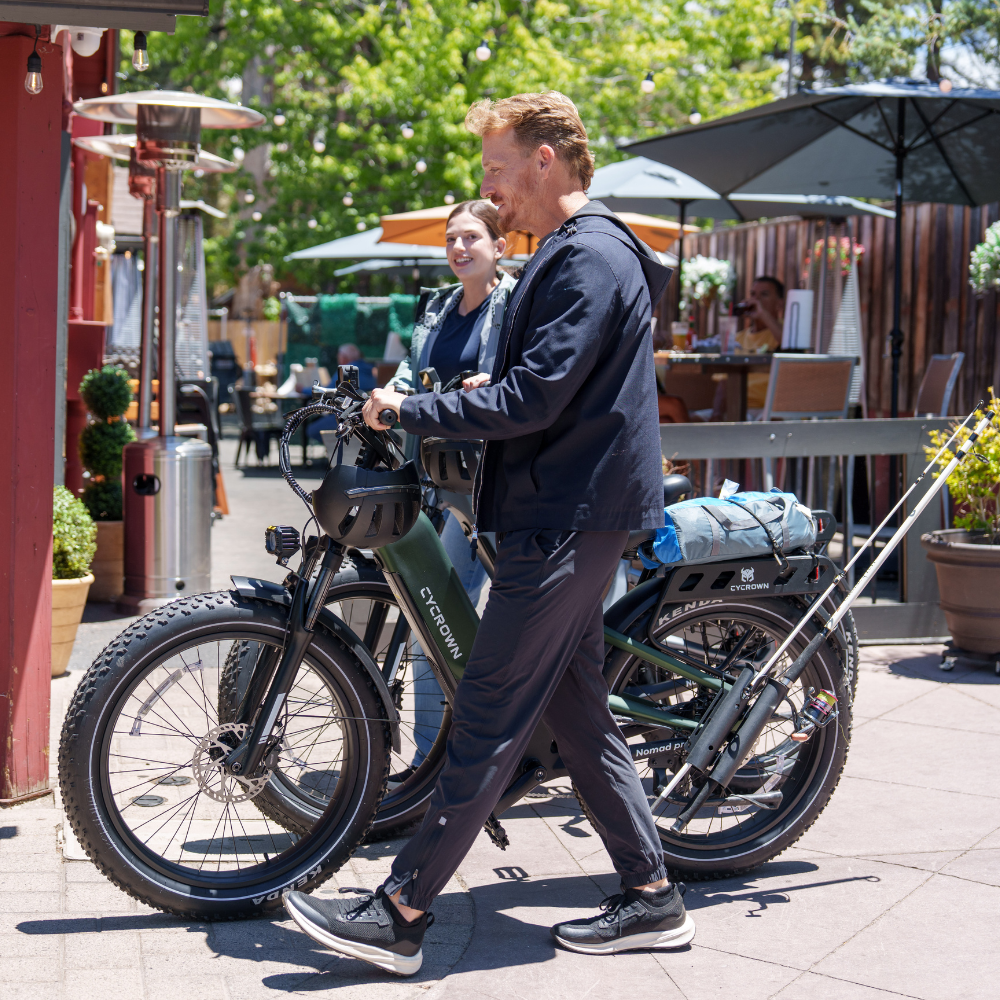
The CYCROWN Nomad Pro is built for exactly this kind of riding. It’s a purpose-designed fat-tire e-bike with the power, build quality, and feature set for riders who want to go places that most bikes can't follow. CYCROWN also has a dedicated guide on the best all-terrain e-bikes of 2026 if you want a proper comparison before committing.
Long-Term Thinking: What Makes an E-Bike Worth Keeping
A well-chosen e-bike should last you years, not months. A few things determine whether it holds up.
Battery longevity is the biggest variable. Lithium-ion batteries degrade over charge cycles, and deceleration depends heavily on how you treat them. Avoiding full discharges, not leaving them at 100% for extended periods, and storing in moderate temperatures all extend battery life meaningfully. CYCROWN covers this thoroughly in their guide on how long electric bike batteries last.
Frame quality and component durability determine whether routine riding stays smooth or turns into a string of small repairs. Also, a well-built e-bike from a brand with accessible service support is genuinely important. CYCROWN recently expanded to 300+ service locations across the U.S., which makes post-purchase support a lot more practical for American riders.
Browse and compare the full lineup at CYCROWN's electric bike collection.
What People Usually Ask
What's the best CYCROWN model for a complete beginner?
The Dremax is a strong starting point for urban commuters since it’s smooth, comfortable, and not overwhelming. For riders who want a more adventurous starting point, the Roma's fat-tire build is forgiving on varied surfaces and genuinely fun to ride from day one.
How important is frame size for e-bikes?
More important than most people realize. A frame that's too large creates strain on your back, shoulders, and wrists over time. A frame too small limits your power output and feels cramped. Check the manufacturer's height recommendations carefully and err toward a size that gives you a slight bend in the knee at the bottom of the pedal stroke.
Do I really need pedal assist, or is throttle enough?
Most riders find they use pedal assist the majority of the time. It's more efficient, extends battery range, and gives you a more natural riding feel. Throttle is a useful complement for short flat stretches or moments when you just don't want to pedal. Having both available is ideal.
How do I know if a motor is strong enough for my hills?
As a general rule, moderate inclines (up to about 8%) are manageable for most 500-750W motors. Steeper or sustained hills benefit from 1000W or more. If hills are a regular feature of your route, it's worth going up a tier in motor power, and you'll thank yourself on the way home after a long day.
What maintenance does an e-bike actually need?
The basics: check tire pressure regularly, test your brakes before longer rides, keep the chain lubricated, and charge the battery thoughtfully. E-bikes have fewer moving parts than cars, so routine upkeep is genuinely minimal. Most riders spend maybe 20–30 minutes a month on maintenance once they're in the habit.


